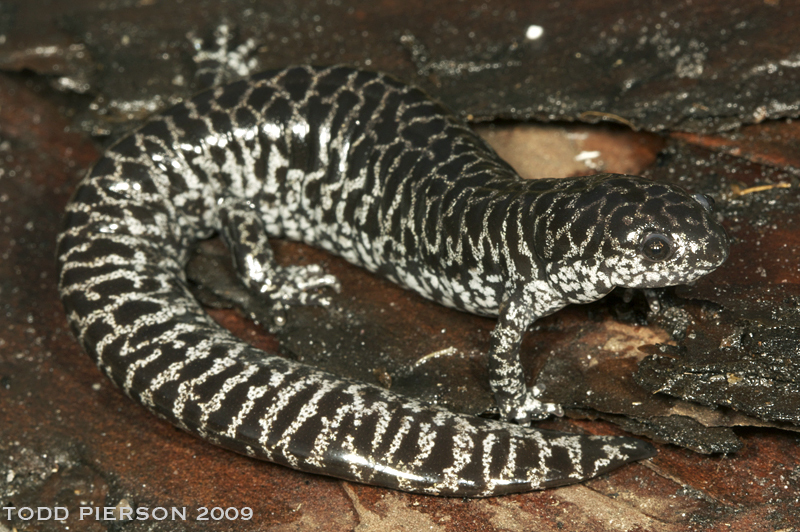
Frosted Flatwoods Salamander
Ambystoma cingulatum
 SalamanderAmbystomatidaesmallVulnerable
Quick ID
Field Notes
A small, slender salamander typically measuring 3.5–5.5 inches (8.9–14 cm) in total length. Body is elongate and compressed laterally, with relatively short limbs and a long, laterally compressed tail. Dorsal coloration is dark brown to black, heavily marked with numerous small white to silvery spots and flecks that give the animal a distinctive frosted appearance. The spots are particularly concentrated along the sides and tail, creating a speckled pattern that is most prominent on the anterior dorsum. The head is narrow and flattened. A key diagnostic feature is the presence of 14–15 costal grooves along the sides, which are prominently displayed on the relatively thin body. The belly is dark gray to black, usually with lighter spots on the ventral surface and undersides of the limbs. The tail comprises roughly half the total body length and is keeled dorsally. Skin is smooth and moist. This species is highly specialized for temporary ponds and flatwoods depressions, inhabiting longleaf pine flatwoods, pocosins, and cypress-gum swamps throughout its limited range in the southeastern coastal plain. Larvae develop in ephemeral wetlands and temporary ponds that lack fish predators. Adults are cryptic and fossorial, remaining beneath leaf litter, logs, and in burrows except during breeding migrations to breeding ponds in winter and early spring. Diet consists of small invertebrates including insects, crustaceans, and other arthropods encountered in soil and leaf litter.
Photos
Click any photo to expand · Photos via iNaturalist
Range
Range data © iNaturalist contributors (CC BY 4.0)