Spiny Softshell
Apalone spinifera
 TurtleTrionychidaelargeCommon
Quick ID
Field Notes
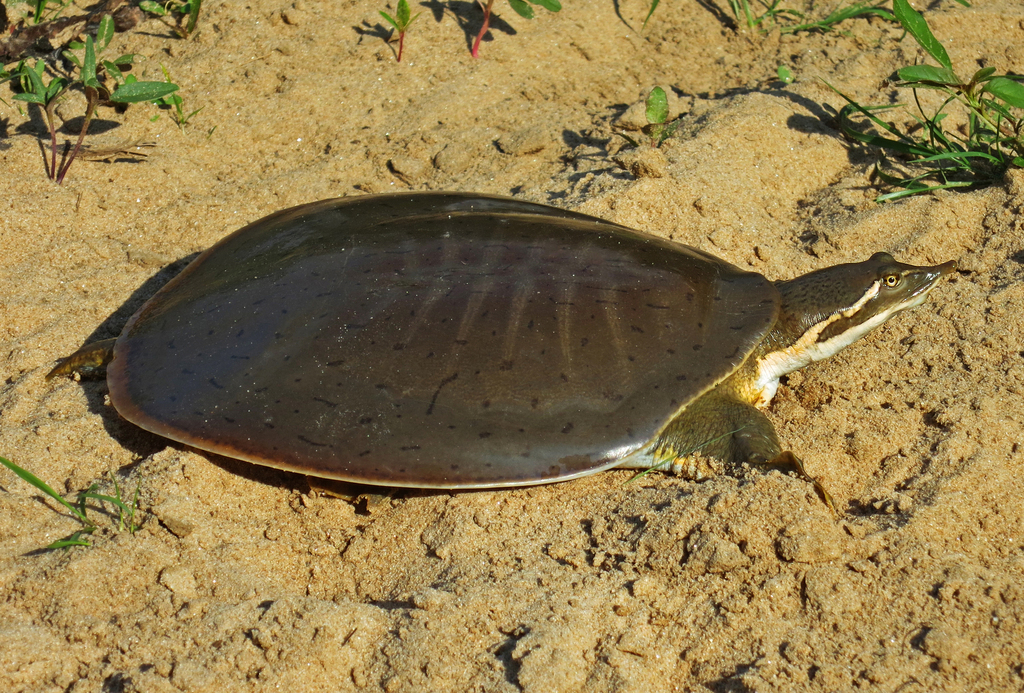
A medium to large softshell turtle typically measuring 8–17 inches (20.3–43.2 cm) in carapace length, with females substantially larger than males and some individuals exceeding 18 inches (45.7 cm). Carapace is round to oval, very flat, and leathery, lacking scutes. Dorsal coloration is typically olive, brown, or tan, usually marked with numerous small, dark round spots, especially prominent in juveniles and adult males; females may become more uniformly colored with age. A key diagnostic feature is the presence of small, conical spines or tubercles along the anterior edge of the carapace. The head is relatively small with a long, tubular snout and round nostrils. Limbs are broad and paddle-like with extensive webbing. Ventral surface is pale white to gray, often with darker mottling, particularly along the edges. Skin is soft and flexible. Occupies a wide range of aquatic habitats including rivers, lakes, reservoirs, and ponds, often preferring sandy or muddy substrates where individuals may bury themselves. Frequently basks at the surface or along shorelines. Diet consists of aquatic invertebrates, fish, amphibians, and occasionally carrion, obtained through active foraging or ambush.
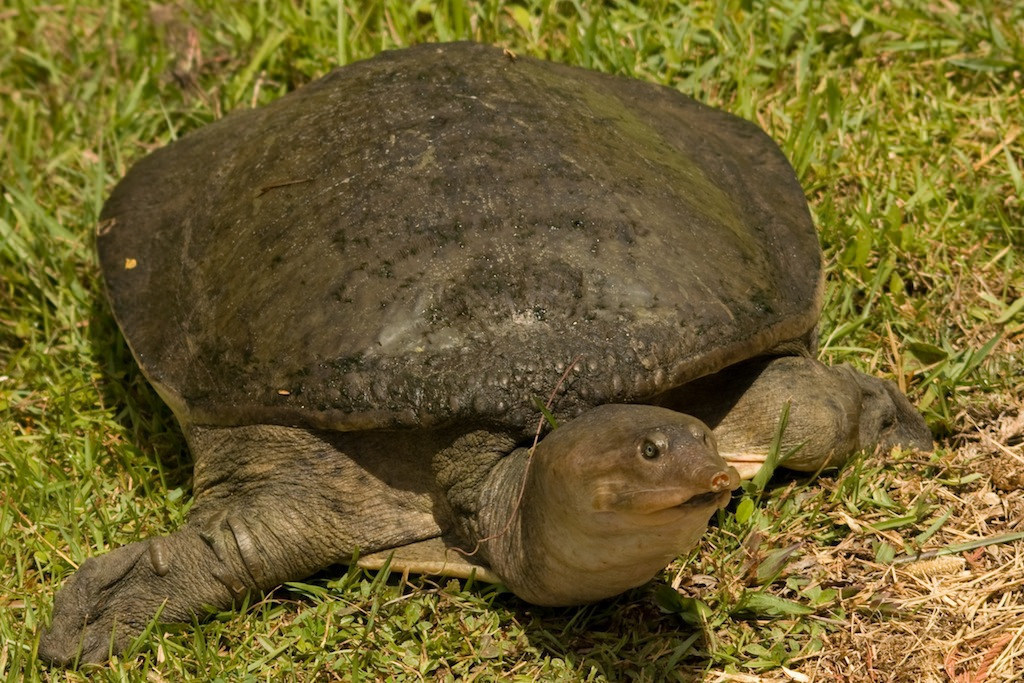
Similar species: Smooth Softshell (Apalone mutica) lacks spines along the anterior carapace and typically has a more uniform, unspotted appearance; Florida Softshell (Apalone ferox) is larger with a more elongated head and neck and typically shows darker, blotchy patterning rather than numerous small round spots.
Photos
Click any photo to expand · Photos via iNaturalist
Seasonal Activity
Individuals recorded by month
Range
Range data © iNaturalist contributors (CC BY 4.0)
Often Confused With
Look at the nostrils and the front edge of the shell. Smooth Softshell has round nostrils and a smooth carapace edge. Spiny Softshell has a ridge in each nostril and spines or cones along the front edge. Florida Softshell has ridged nostrils and flattened hemispheres (bumps) along the front edge rather than true spines.