Central American Boa
Boa imperator
 SnakeBoidaelargeVery Rare
Quick ID
Field Notes
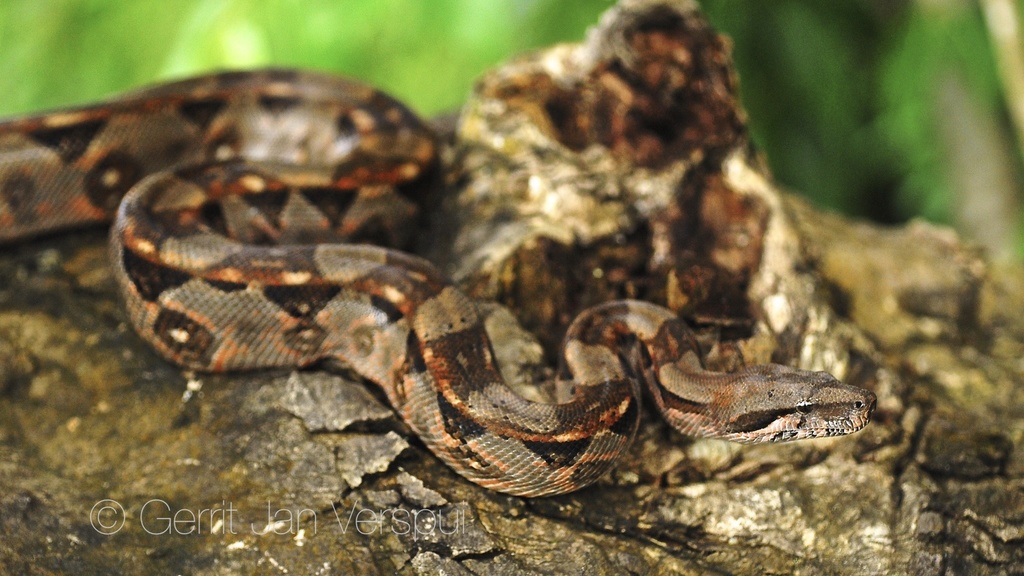
A large, heavy-bodied constrictor typically measuring 3–5 feet (91–152 cm) in total length, with females often exceeding 6 feet (183 cm) and occasional individuals reaching 8 feet (244 cm). Body is robust and cylindrical with a moderately broad head only slightly set off from the neck. Dorsal coloration is typically tan, brown, or reddish-brown with a series of darker brown to reddish crossbands that are wider along the vertebral line and taper toward the ventrolateral surface, creating a characteristic hourglass or saddle-like appearance. The head often bears a dark postorbital stripe. Eye coloration is highly variable, ranging from yellow to red to brown. Scales are smooth to slightly keeled. A well-developed heat-sensing pit line runs along the labial scales. Ventral surface is cream to tan, often with darker flecking or barring. Juveniles resemble adults but are typically pinkish or reddish in color with more vivid patterning. Primarily inhabits lowland tropical rainforests, deciduous forests, secondary growth, plantations, and human structures, from sea level to approximately 1,200 meters elevation. Largely nocturnal and cryptic during the day, often found in trees, under leaf litter, or sheltering in burrows and structures. Diet consists primarily of small to medium mammals, including rodents, opossums, and bats, as well as birds and occasionally lizards and frogs, subdued via constriction.
Photos
Click any photo to expand · Photos via iNaturalist
Range
Range data © iNaturalist contributors (CC BY 4.0)