Common Snapping Turtle
Chelydra serpentina
 TurtleChelydridaelargeCommon
Quick ID
Field Notes
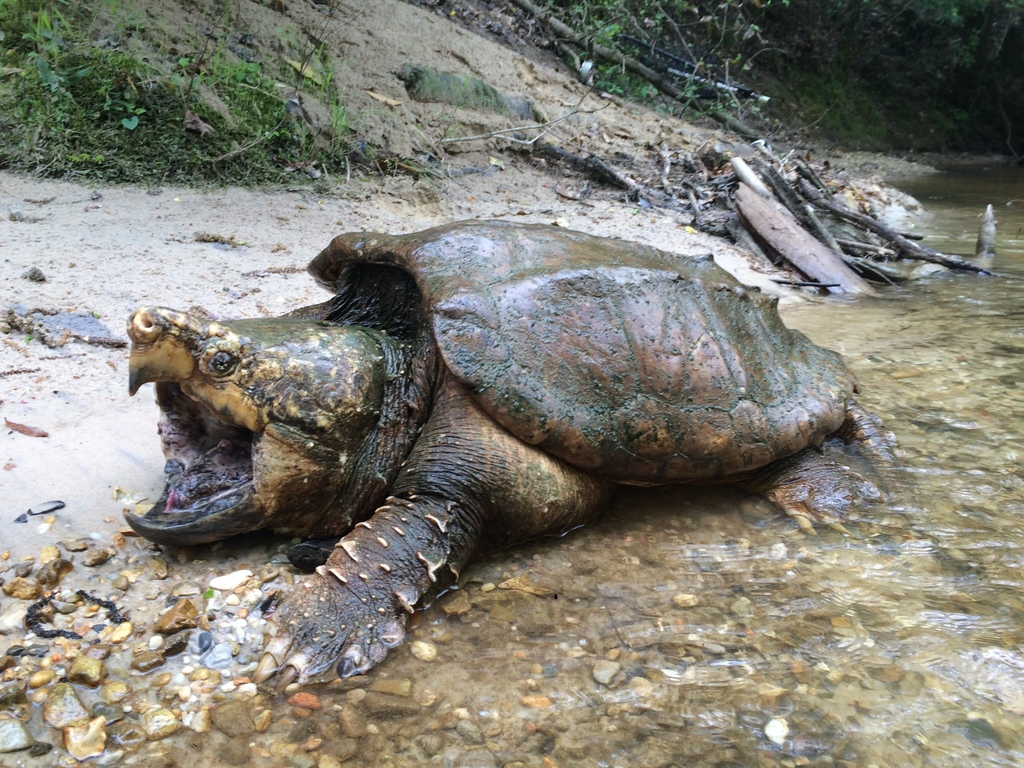
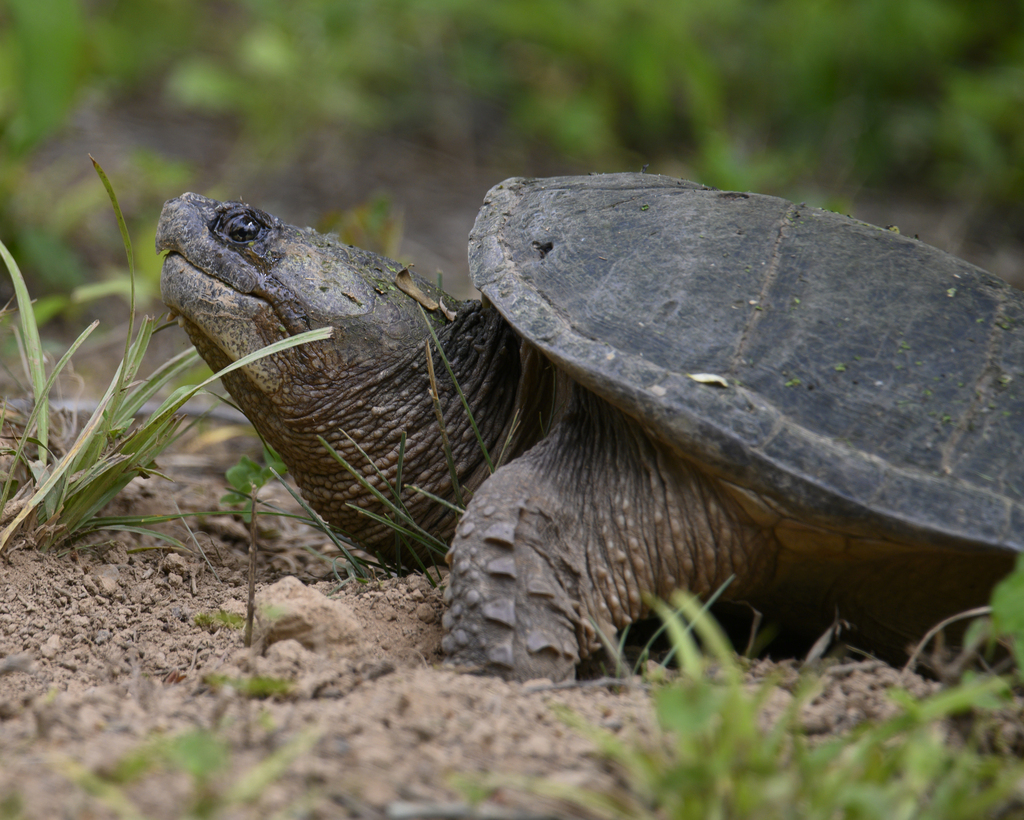
A large, heavy-bodied freshwater turtle typically measuring 8–18 inches (20.3–45.7 cm) in carapace length, with some individuals exceeding 20 inches (50.8 cm) and weighing over 75 pounds (34 kg). Carapace is rough, ridged, and often bears three low, longitudinal keels, especially prominent in younger individuals, becoming smoother with age. Coloration is typically dark brown, olive, or nearly black, often covered with algae. The posterior margin of the carapace is strongly serrated. Plastron is greatly reduced and cross-shaped, leaving much of the underside exposed. The head is large with a powerful hooked beak and strong jaws. The neck is long and muscular with tuberculate skin. The tail is long, nearly as long as the carapace, with a row of prominent, sawtooth-like dorsal scales. Limbs are robust with strong claws. Ventral surface is lighter, typically gray to yellowish. Occupies a wide variety of aquatic habitats including ponds, lakes, rivers, marshes, and swamps, often favoring slow-moving or still water with soft substrates. Primarily aquatic but frequently travels overland, especially during nesting. Diet is highly omnivorous and opportunistic, including fish, amphibians, reptiles, birds, mammals, invertebrates, and plant material, as well as carrion. Known for a defensive disposition on land, often gaping and striking when threatened.
Similar species: Alligator Snapping Turtle (Macrochelys temminckii) has a more massive head, strongly pronounced dorsal keels forming a spiked appearance, and a worm-like lure on the tongue; Softshell Turtles (Apalone spp.) have flat, leathery shells lacking scutes and a long tubular snout; Musk Turtles (Sternotherus spp.) are much smaller with a domed shell and reduced tail length.
Photos
Click any photo to expand · Photos via iNaturalist
Seasonal Activity
Individuals recorded by month
Range
Range data © iNaturalist contributors (CC BY 4.0)
Recorded At
Often Confused With
Both species are large, aggressive, and best left alone. Common Snapping Turtle: smooth carapace, long saw-toothed tail, smaller tubercles on the neck, found across eastern North America. Alligator Snapping Turtle: three prominent raised keels on the shell, massive hooked beak, worm-like lure on tongue, restricted to the Gulf drainage. Alligator Snapper is much bulkier and has a larger head relative to body size. Common Snappers often bask and wander overland; Alligator Snappers rarely leave deep water.