Southeast Asian Narrow-headed Softshell Turtle
Chitra chitra
 TurtleTrionychidaelargeVery Rare
Quick ID
Field Notes
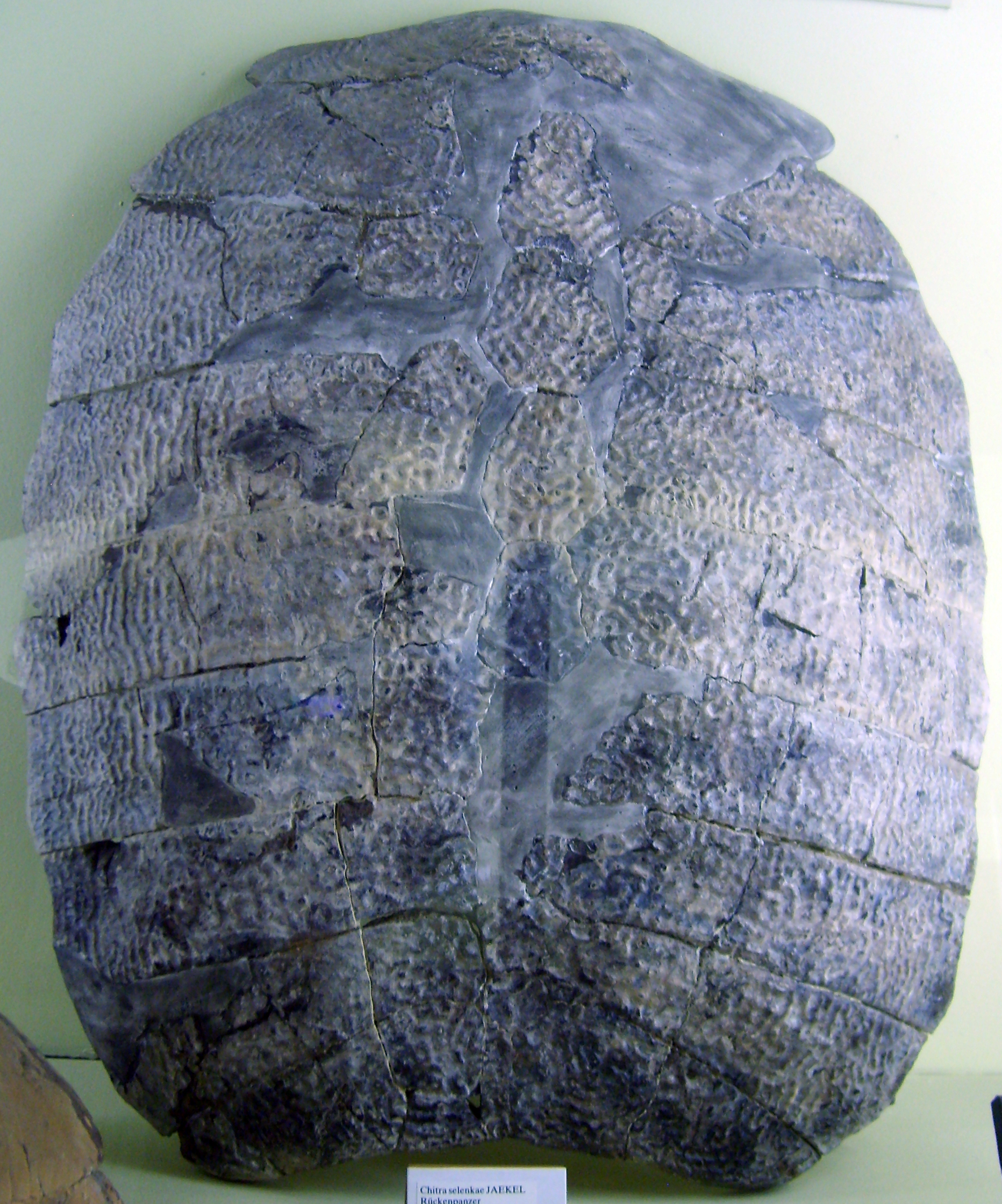
A large, flattened softshell turtle typically measuring 24–32 inches (61–81 cm) in carapace length, with some females exceeding 40 inches (102 cm). Carapace is olive-brown to gray-brown, relatively smooth with fine granulations rather than the prominent ridges found in many other trionychids. The carapace is broadly oval and somewhat flattened dorsally. A diagnostic feature is the elongated, narrow head with a long, tubular snout—much more elongate than in related genera—used for breathing while submerged and foraging in soft substrates. Coloration of the head and neck is typically greenish-brown to grayish. The limbs are paddle-like with webbed digits and clawed feet adapted for aquatic locomotion. Skin is smooth and leathery with a velvety texture, typically olive to gray-brown dorsally. Plastron is cream to yellowish-white, usually unmarked. A narrow, bony ridge typically extends along the midline of the carapace, and the anterior margin of the carapace bears a distinct notch. Juveniles resemble adults but are often slightly more colorful and have a proportionally larger head. Primarily inhabits large rivers, wide streams, and connected wetlands in Southeast Asia, favoring areas with soft, muddy substrates and dense aquatic vegetation. Depth and current preference varies seasonally. Diet consists of aquatic invertebrates, particularly mollusks, as well as small fish, carrion, and aquatic vegetation, obtained through foraging on the bottom and along substrates.
Similar species: Chitra indica (Chitra indica) has a more rounded carapace outline and a slightly shorter snout; Asian Giant Softshell Turtle (Pelochelys cantorii) lacks the pronounced midline ridge and has a much larger maximum size with more prominent tubercles on the carapace; Aspideretes gangeticus (Aspideretes gangeticus) has a more heavily granulated carapace and broader head with less elongate snout proportions.
Range
Range data © iNaturalist contributors (CC BY 4.0)