Timber Rattlesnake
Crotalus horridus
 SnakeViperidaelarge⚠ VENOMOUSCommon
Quick ID
Field Notes
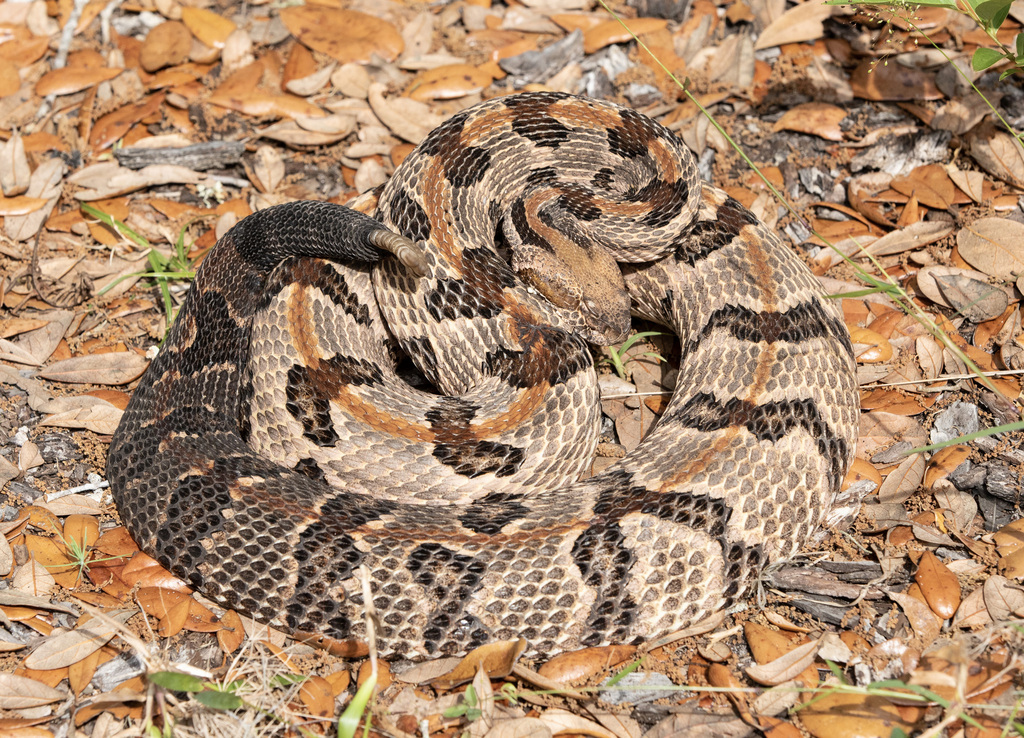
A large, heavy-bodied pit viper typically measuring 36–60 inches (91–152 cm) in total length, with some individuals exceeding 70 inches (178 cm). Body is robust with a broad, triangular head distinctly set off from the neck. Dorsal coloration is variable, ranging from gray, tan, yellowish, or brown to nearly black, overlaid with a series of dark brown to black chevron-shaped crossbands that are typically V- or M-shaped along the back. A distinct rusty red, orange, or brown vertebral stripe is often present along the midline in many individuals. The tail is typically dark, often black, ending in a well-developed rattle. Scales are strongly keeled. Vertical pupils and prominent loreal pits are present. Ventral surface is yellowish to cream, usually with scattered dark mottling. Juveniles resemble adults but often have more contrasting patterning and a yellowish tail tip used for caudal luring. Primarily inhabits deciduous forests, rocky ridges, wooded hillsides, and forested floodplains, often associated with ledges, talus slopes, and fallen logs. Seasonal movements between hibernacula and summer foraging areas are common. Diet consists primarily of small mammals, as well as birds and occasionally amphibians and reptiles, subdued via envenomation.
Similar species: Western Diamondback Rattlesnake (Crotalus atrox) has distinct diamond-shaped dorsal blotches with light borders and bold black-and-white tail banding; Prairie Rattlesnake (Crotalus viridis) has more diffuse blotches and lacks a consistent rusty vertebral stripe; Northern Watersnake (Nerodia sipedon) lacks a rattle, has round pupils, and exhibits banding or blotches without the sharply defined chevron pattern.
Photos
Click any photo to expand · Photos via iNaturalist
Range
Range data © iNaturalist contributors (CC BY 4.0)
Often Confused With
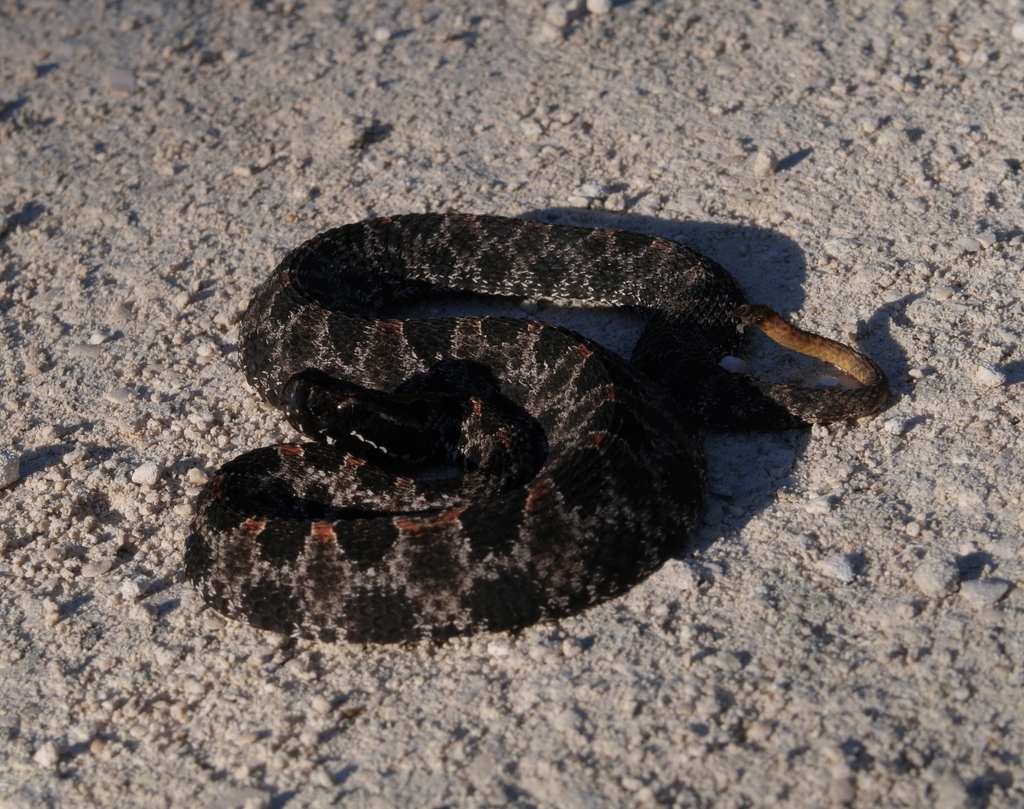
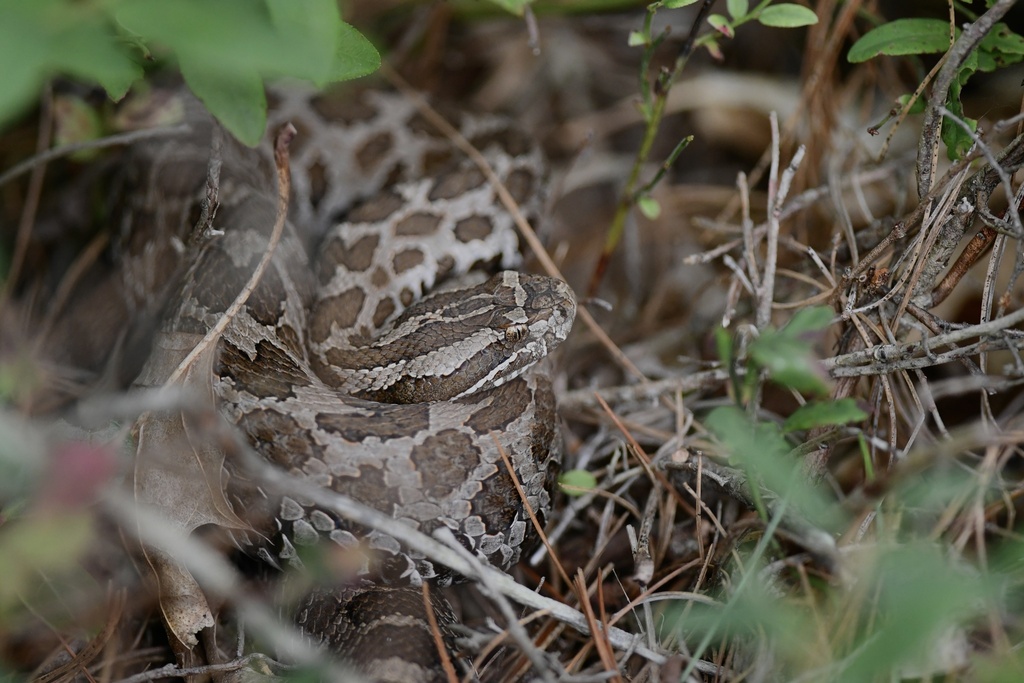
Three rattlesnakes in the eastern US are small to medium-sized and frequently confused. Timber Rattlesnake: the largest of the three (up to 5 ft), chevron-shaped crossbands, plain gray or yellow head with no facial line, no facial pit mask. Pygmy Rattlesnake: tiny (under 2 ft), faint rattle (sounds like an insect buzz), slender reddish-brown dorsal stripe, found in SE lowlands. Eastern Massasauga: medium-sized, heart-shaped head, distinct dark mask through the eye, round dark blotches, northern wetlands and prairies.