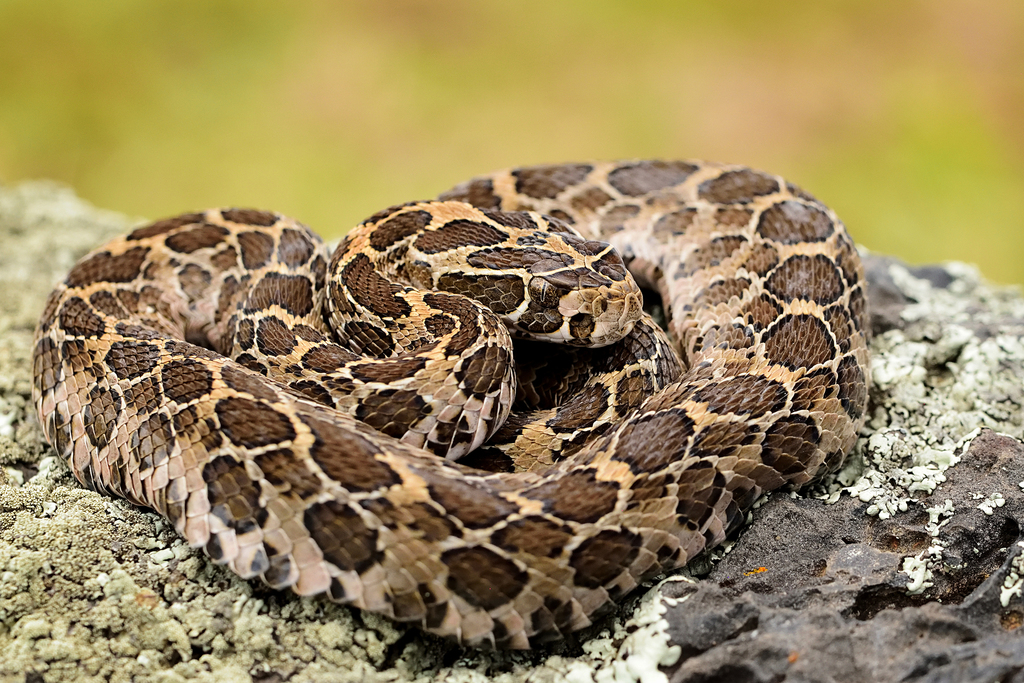
Mexican Lancehead Rattlesnake
Crotalus polystictus
 SnakeViperidaemedium⚠ VENOMOUSRare
Quick ID
Field Notes
A small to medium-sized pit viper typically measuring 16–24 inches (41–61 cm) in total length, with some individuals reaching up to 30 inches (76 cm). Body is slender to moderately robust with a relatively narrow, slightly flattened head distinctly set off from the neck. Dorsal coloration is highly variable, ranging from gray, brown, tan, or olive to reddish-brown, overlaid with a series of dark brown to black crossbands or blotches that run across the back and sides. The crossbands are typically irregular and often indistinct, sometimes creating a mottled or speckled appearance rather than sharply defined markings—a characteristic reflected in the scientific name polystictus, meaning "many spots." A faint to moderately distinct vertebral stripe may be present. The head displays characteristic facial pits between the eye and nostril. Scales are keeled, contributing to a somewhat rough texture. The tail is relatively short and thin, ending in a small but well-developed rattle, though the rattle may be worn or broken in older individuals. Vertical pupils and prominent loreal pits are present. Ventral surface is cream, tan, or yellowish, often with dark mottling or blotches, particularly on the lateral margins. Juveniles resemble adults and possess a distinctly yellowish or white tail tip used for caudal luring. This highly specialized, venomous species primarily inhabits high-elevation volcanic and montane pine-oak forests, typically at elevations of 6,000–10,000 feet (1,829–3,048 m) in central Mexico. It is often found among rocky outcrops, loose volcanic debris, fallen logs, and areas with substantial ground cover. Diet consists primarily of lizards and small terrestrial vertebrates, subdued via envenomation.
Similar species: Cantil (Agkistrodon bilineatus) lacks a rattle, has a more robust build, and exhibits two prominent light stripes on the head; Mexican Pitviper (Atropoides mexicanus) is more robust with more distinct crossbands and inhabits lower elevations; Eyelash Pitviper (Bothriechis schlegelii) has prominent horn-like scales above the eyes and more vibrant coloration, typically in lowland cloud forests.
Photos
Click any photo to expand · Photos via iNaturalist
Range
Range data © iNaturalist contributors (CC BY 4.0)