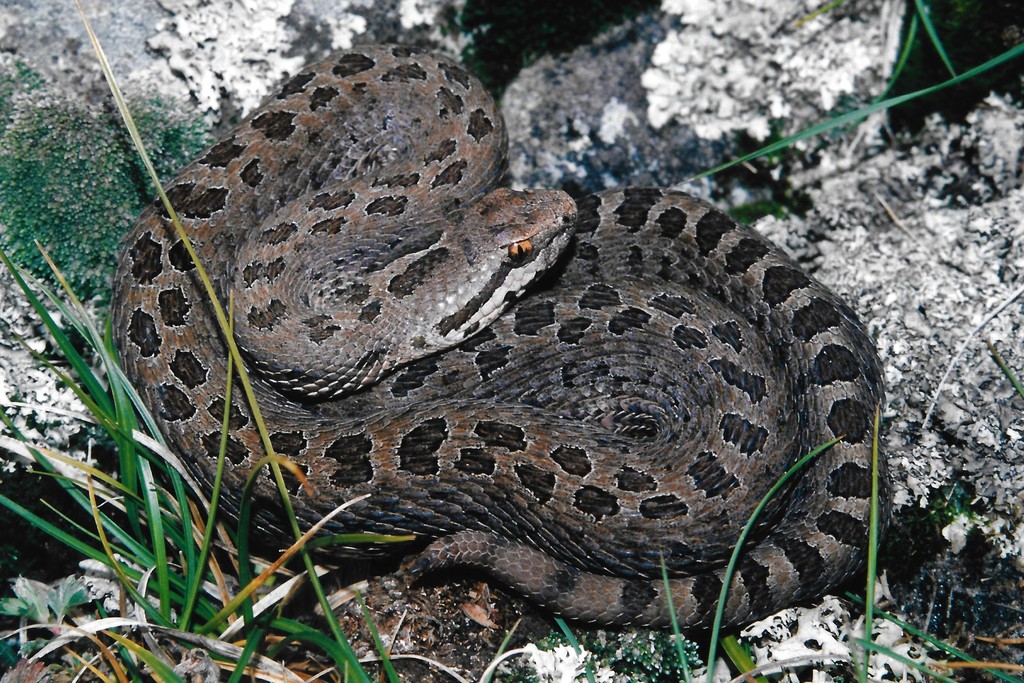
Dusky Rattlesnake
Crotalus triseriatus
 SnakeViperidaemedium⚠ VENOMOUSUncommon
Quick ID
Field Notes
A small, slender pit viper typically measuring 16–24 inches (41–61 cm) in total length, with some individuals reaching up to 30 inches (76 cm). Body is relatively slender compared to other rattlesnakes, with a moderately broad head only slightly set off from the neck. Dorsal coloration is gray, tan, or brown, overlaid with a series of dark brown to black crossbands or blotches arranged in three alternating rows—one vertebral and two lateral—giving rise to the species name triseriatus. The blotches are often poorly defined and may appear as dull diamonds or elongated rectangles. A faint or indistinct pale stripe may run along the midline. The tail is relatively short and slender, terminating in a small but functional rattle. Scales are keeled. Vertical pupils and prominent loreal pits are present. Ventral surface is cream to yellowish, often with dark mottling or spotting. Juveniles resemble adults but may have more contrasting patterning and a distinctive yellowish tail tip. Primarily inhabits high-altitude forest clearings, montane meadows, oak and pine forests, and grassy areas in the Sierra Madre Occidental and central Mexican highlands, typically at elevations between 5,000–9,000 feet (1,524–2,743 m). Often found in cooler, wetter microhabitats compared to other Mexican rattlesnakes. Diet consists primarily of small rodents, lizards, and occasionally insects and spiders, subdued via envenomation.
Photos
Click any photo to expand · Photos via iNaturalist
Range
Range data © iNaturalist contributors (CC BY 4.0)