Abu Salamander
Hynobius abuensis
 SalamanderHynobiidaesmallVery Rare
Quick ID
Field Notes
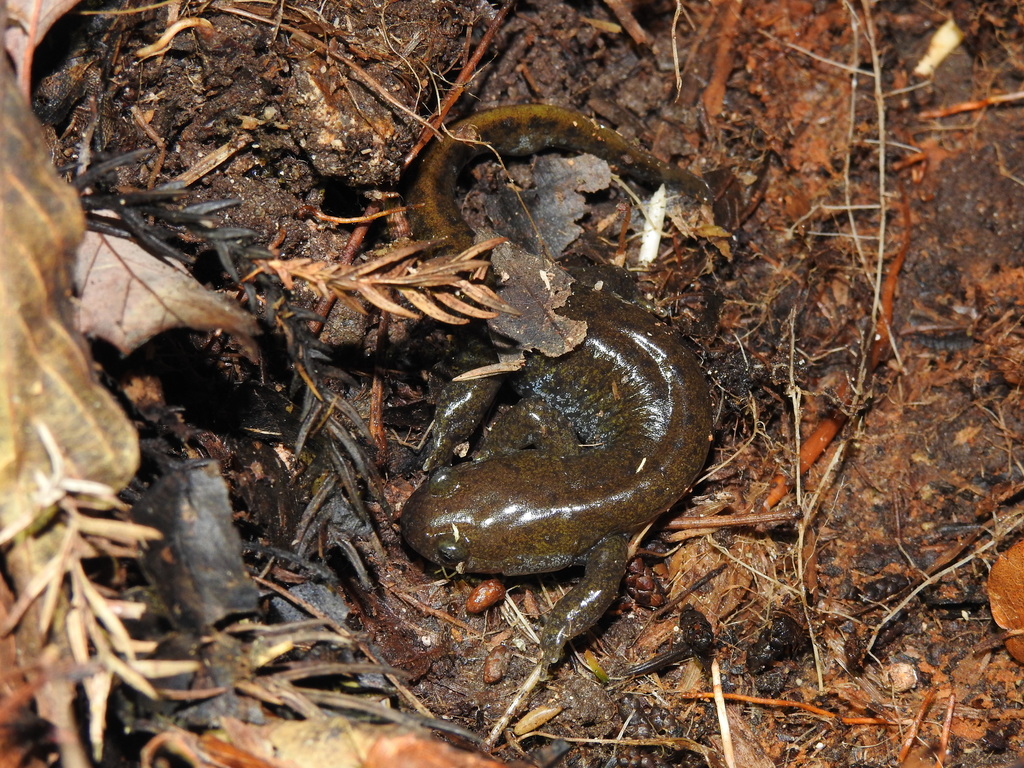
A small, slender salamander typically measuring 3.5–4.5 inches (8.9–11.4 cm) in total length. Body is elongate and cylindrical with relatively short limbs. Dorsal coloration is dark brown to nearly black, often with a subtle reddish or copper tint along the midline and sides. A faint, pale vertebral stripe may be present in some individuals. The head is relatively small and flattened. Costal grooves are prominent, typically numbering 13–14 between the fore and hind limbs. Dorsolateral folds are weakly developed or absent, distinguishing this species from some congeners. The tail is approximately equal to the body length and tapers gradually to a fine point. Skin texture is smooth and moist. Ventral surface is lighter, ranging from pale brown to yellowish-brown, often with darker mottling or a darker midline. Primarily inhabits cool, montane forest streams and spring seepage areas on limestone substrates in the mountains of southwestern Japan, particularly in the Abu region (Hyogo Prefecture). Often found beneath stones, leaf litter, and moss in riparian zones. Diet consists of small invertebrates including copepods, mites, and other microarthropods characteristic of stream microhabitats.
Similar species: Japanese Salamander (Hynobius leechii) has more prominent costal grooves and typically occurs at lower elevations; Kajika Frog (Bufo japonicus) is larger and more robust with warty skin; Clouded Salamander (Aneides ferreus) has prominent costal grooves and a more heavily patterned dorsum.
Range
Range data © iNaturalist contributors (CC BY 4.0)