Dunn's Oriental Salamander
Hynobius dunni
 SalamanderHynobiidaesmallRare
Quick ID
Field Notes
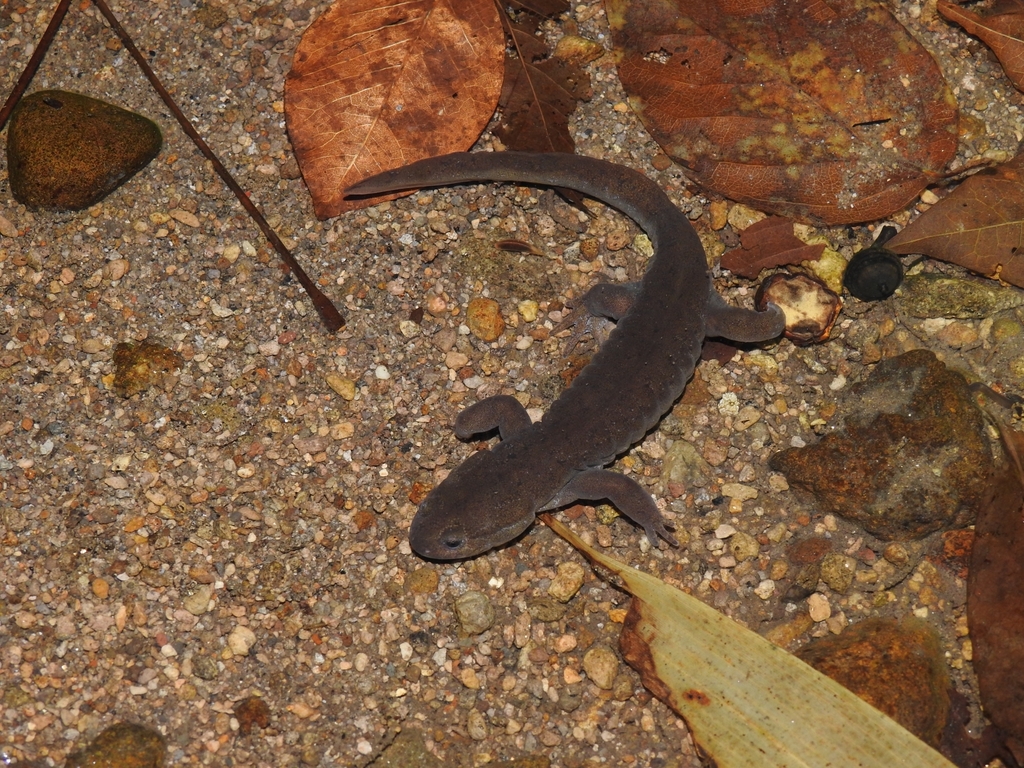
A small lungless salamander typically measuring 3.5–5.0 inches (9–13 cm) in length. Body is slender and elongate with a relatively long tail that comprises approximately half the total length. Limbs are short and delicate. Dorsal coloration is uniformly dark brown to blackish-brown, often with a slight olivaceous tint, lacking distinct patterns or markings. The dorsal surface may show faint longitudinal striations or a subtle mid-dorsal stripe in some individuals. The head is small and somewhat flattened. Skin is smooth and moist. A key diagnostic feature is the presence of 13–14 costal grooves between the limbs. The limbs are relatively short with reduced digits, typically 4 toes on the hind feet. Ventral surface is slightly lighter than the dorsum, ranging from dark gray to dark brown, sometimes with a reddish or orange tint, particularly along the lateral surfaces and ventrolateral region. Some individuals may display faint spotting or mottling on the ventral surface. The tail is often slightly flattened dorsoventrally. Primarily inhabits cool, forested montane streams and their surrounding riparian zones in central and eastern Asia, preferring areas with dense moss cover, leaf litter, and proximity to flowing water. Often found beneath rocks, logs, and debris in or near streams during wet conditions. Diet consists of small arthropods including mites, springtails, small insects, and other invertebrates found in leaf litter and stream margins.
Photos
Click any photo to expand · Photos via iNaturalist
Range
Range data © iNaturalist contributors (CC BY 4.0)