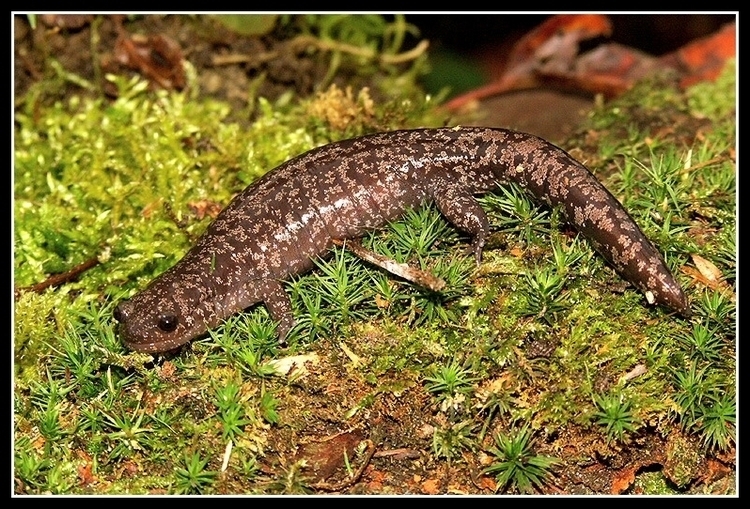
Blotched Salamander
Hynobius naevius
 SalamanderHynobiidaesmallRare
Quick ID
Field Notes
A small plethodontid salamander typically measuring 2.8–4.3 inches (7–11 cm) in total length. Body is slender and elongate with short limbs and a relatively short tail. Dorsal coloration is highly variable, ranging from tan, brown, gray, or reddish-brown with a characteristic pattern of dark blotches, spots, or irregular markings distributed across the back and sides. The dorsal pattern typically consists of small dark brown to black blotches or flecks scattered on a lighter background, creating a heavily mottled appearance. The head is relatively small and pointed. Costal grooves are typically 15–17, extending from forelimbs to hind limbs. The vomeronasal organ is present, indicating a semifossorial or cryptic lifestyle. A light-colored stripe or band may be present along the vertebral line in some individuals. Ventral surface is lighter, ranging from whitish to pale gray, often with dark flecking or mottling, particularly on the belly and tail. Skin is smooth and somewhat glossy. Primarily inhabits mixed deciduous and coniferous forests, particularly in the mountainous regions where it occurs, favoring cool, moist microhabitats beneath logs, leaf litter, moss-covered rocks, and loose bark. Active primarily during spring and autumn when moisture levels are highest. Diet consists of small arthropods including springtails, mites, tiny insects, and other small invertebrates encountered in the soil and leaf litter.
Photos
Click any photo to expand · Photos via iNaturalist
Range
Range data © iNaturalist contributors (CC BY 4.0)