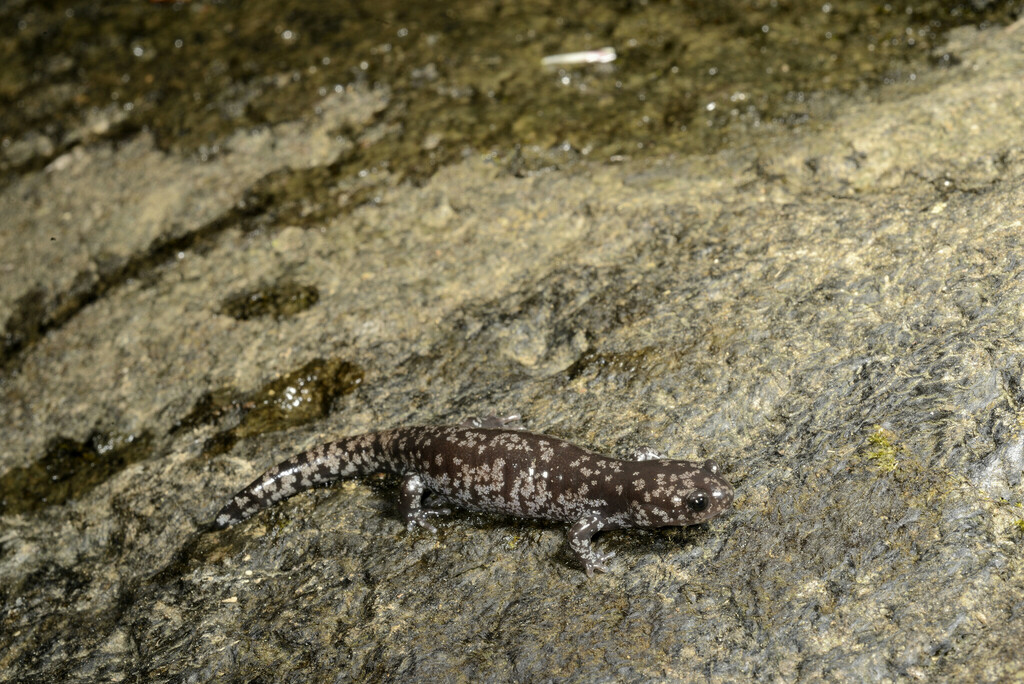
Tortoiseshell Salamander
Hynobius stejnegeri
 SalamanderHynobiidaesmallVery Rare
Quick ID
Field Notes
A small, slender salamander typically measuring 3.5–5.5 inches (9–14 cm) in total length. Body is elongate and somewhat compressed laterally, with a relatively short tail comprising approximately one-third of total length. Dorsal coloration is highly variable and distinctive, ranging from reddish-brown to dark brown or nearly black, overlaid with an intricate pattern of lighter tan, cream, or yellowish reticulations or spots that create a tortoiseshell-like appearance—hence the common name. The pattern often forms irregular polygonal markings across the back and sides. Head is relatively small and pointed. Eyes are small and prominent. Costal grooves are typically 12–13 in number, running along the sides of the body. Limbs are short but well-developed, with four toes on the forelimbs and five on the hind limbs. Digits are relatively slender. Dorsal surface of tail is keeled and often exhibits fine banding or reticulation similar to the body. Skin is smooth and moist. Ventral surface is typically lighter, ranging from cream to pale brown, often with darker pigmentation. The tortoiseshell patterning is a key diagnostic feature of this species.
Typically inhabits cool, moist forested habitats, particularly montane regions with dense vegetation, leaf litter, and proximity to seepage areas or small streams. Frequently encountered under logs, leaf piles, moss-covered rocks, and other shelter objects in humid microhabitats. This is a terrestrial salamander that requires consistently moist conditions and cool temperatures. Seasonal breeding migrations to small pools or temporary water bodies may occur. Diet consists of small invertebrates including insects, mites, and other tiny arthropods encountered in leaf litter and soil.
Range
Range data © iNaturalist contributors (CC BY 4.0)