Korean Small Salamander
Hynobius unisacculus
 SalamanderHynobiidaesmallRare
Quick ID
Field Notes
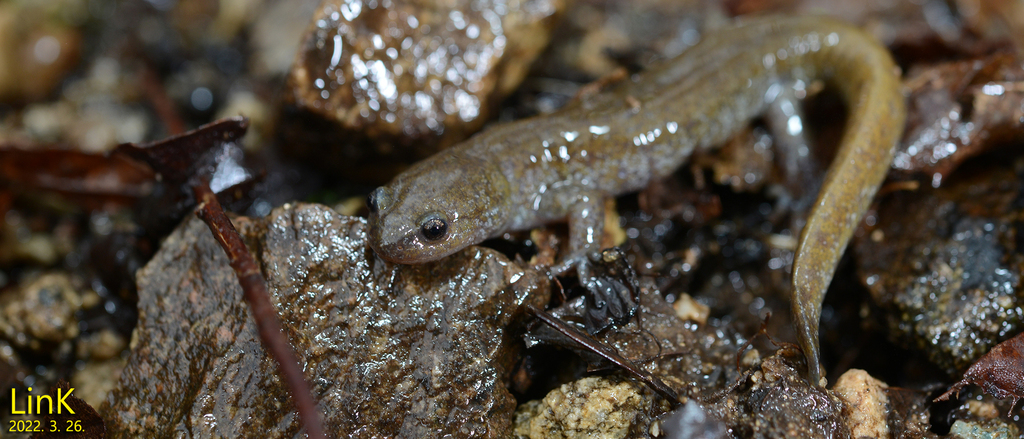
A small, slender salamander typically measuring 3.5–5.5 inches (9–14 cm) in total length. Body is elongate and gracile with relatively short limbs and a long, laterally compressed tail. Dorsal coloration is typically dark brown to blackish, often with a reddish or bronze tint along the vertebral region. A pale or golden vertebral stripe may be present in some individuals, running from the head to the tail tip. Dorsolateral folds are prominent and well-defined, extending from behind the head to the tail base. The head is small and somewhat flattened. Costal grooves are distinct, typically numbering 13–14 along the body. Skin texture is smooth to slightly granular. A key diagnostic feature of this species is the presence of a single sac-like structure (sacculus) associated with the vomerine teeth in males, distinguishing it from related hynobiid species. Ventral surface is lighter, ranging from pale yellow to cream-colored, often with fine dark flecking. Eyes are relatively large and prominent. Commonly inhabits cool, moist forested habitats, particularly in mountainous regions with flowing streams, spring runs, and seepage areas. Frequents areas with dense leaf litter, moss-covered rocks, and fallen logs. More terrestrial than many aquatic salamanders but dependent on moisture. Diet consists of small invertebrates including insects, mites, and other arthropods.
Photos
Click any photo to expand · Photos via iNaturalist
Range
Range data © iNaturalist contributors (CC BY 4.0)