Eastern Mud Turtle
Kinosternon subrubrum
 TurtleKinosternidaesmallCommon
Quick ID
Field Notes
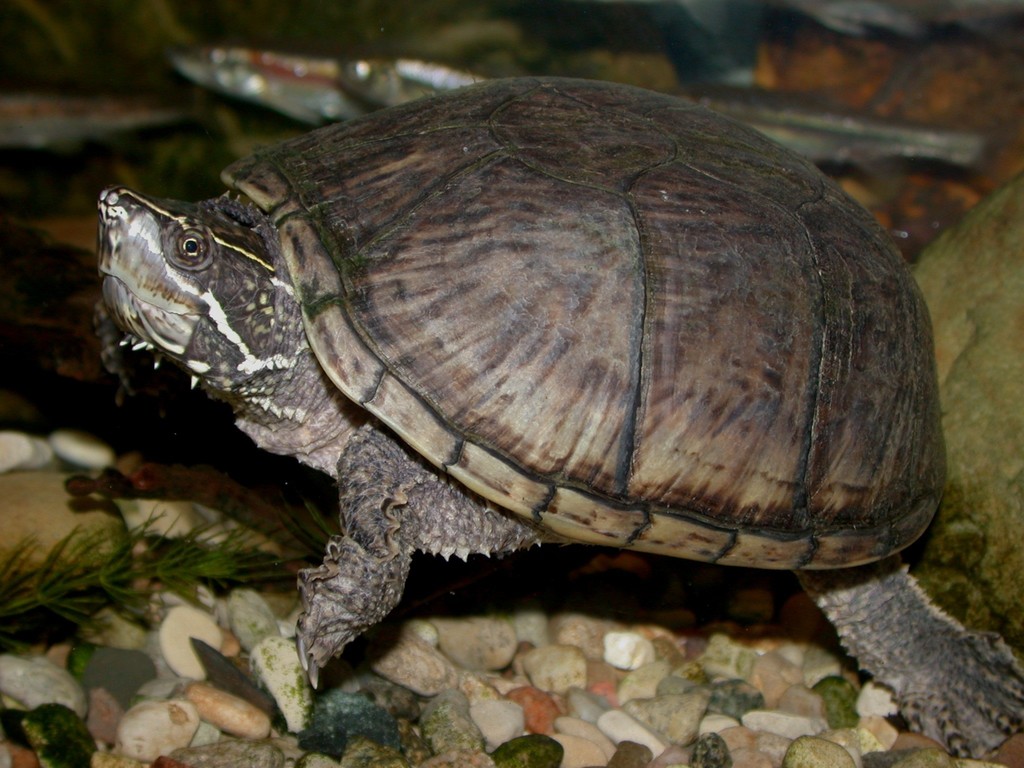
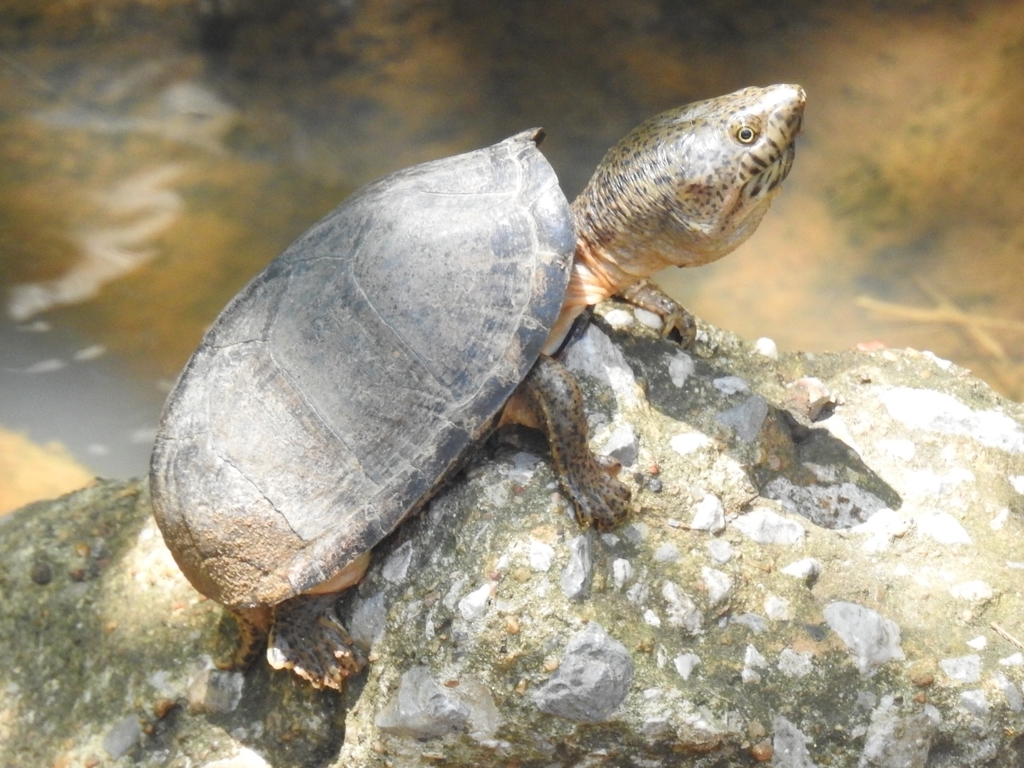
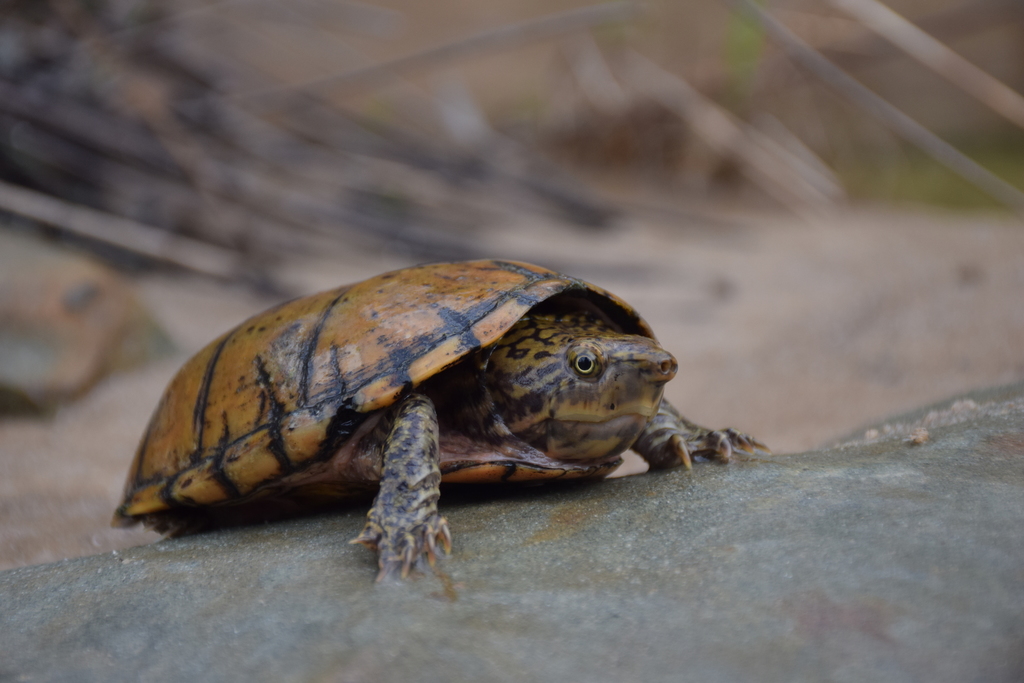
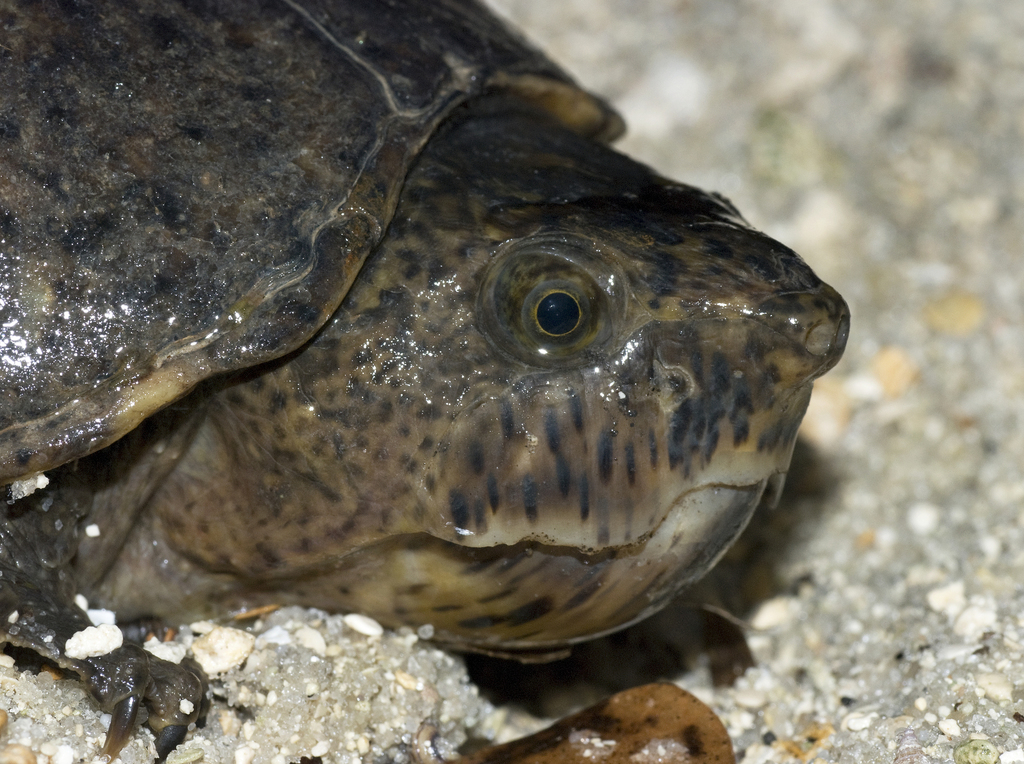
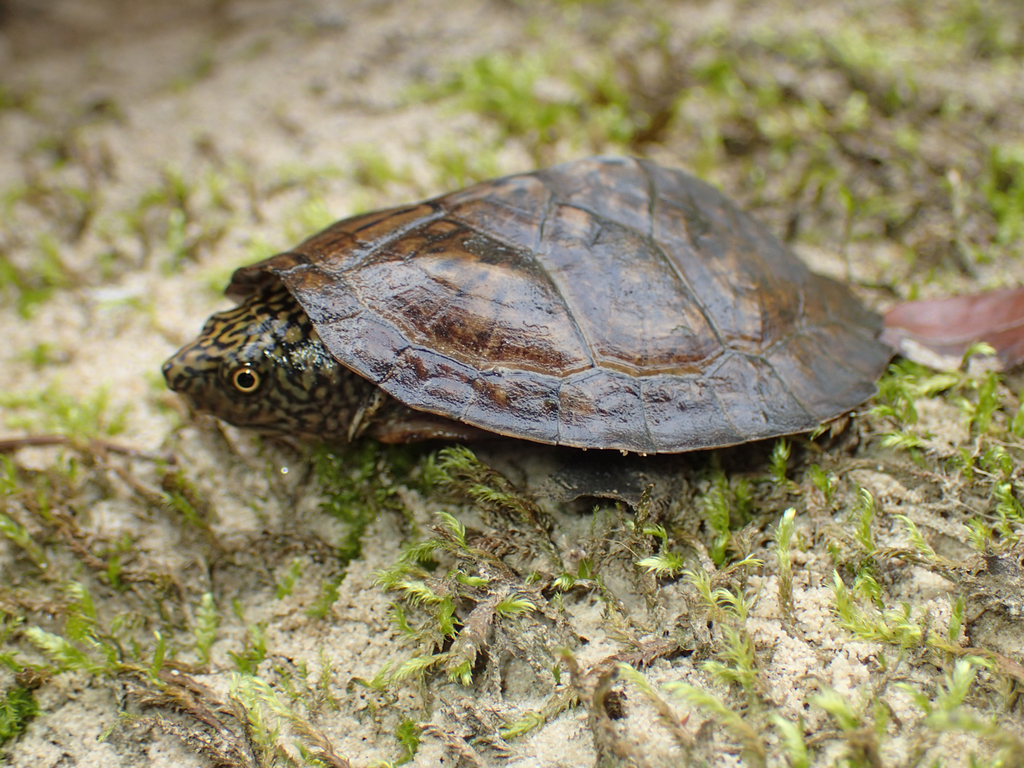
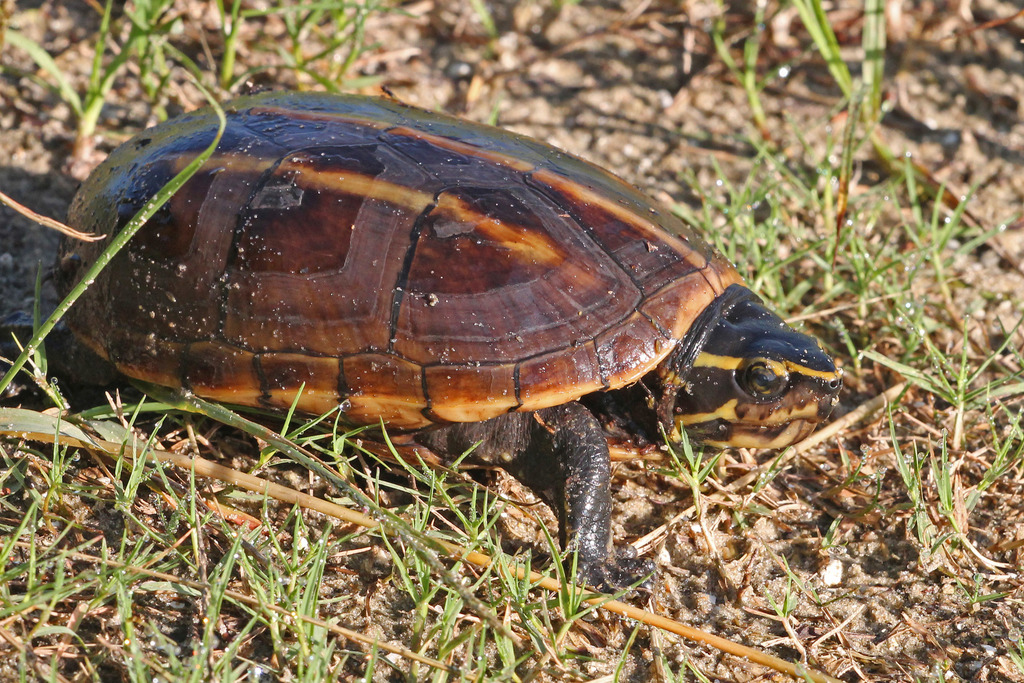
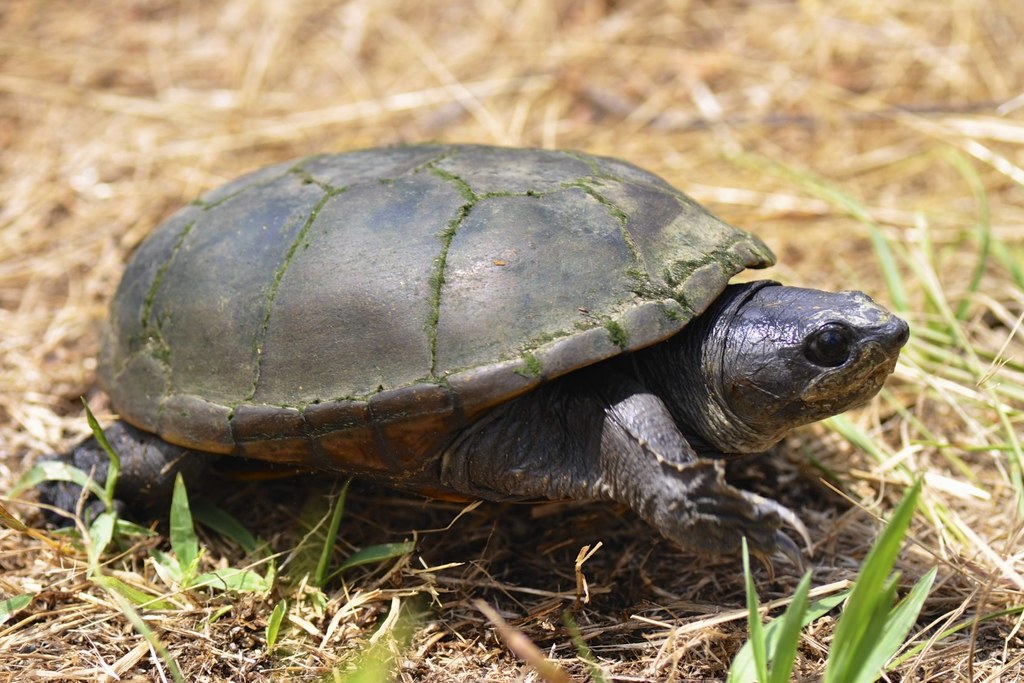
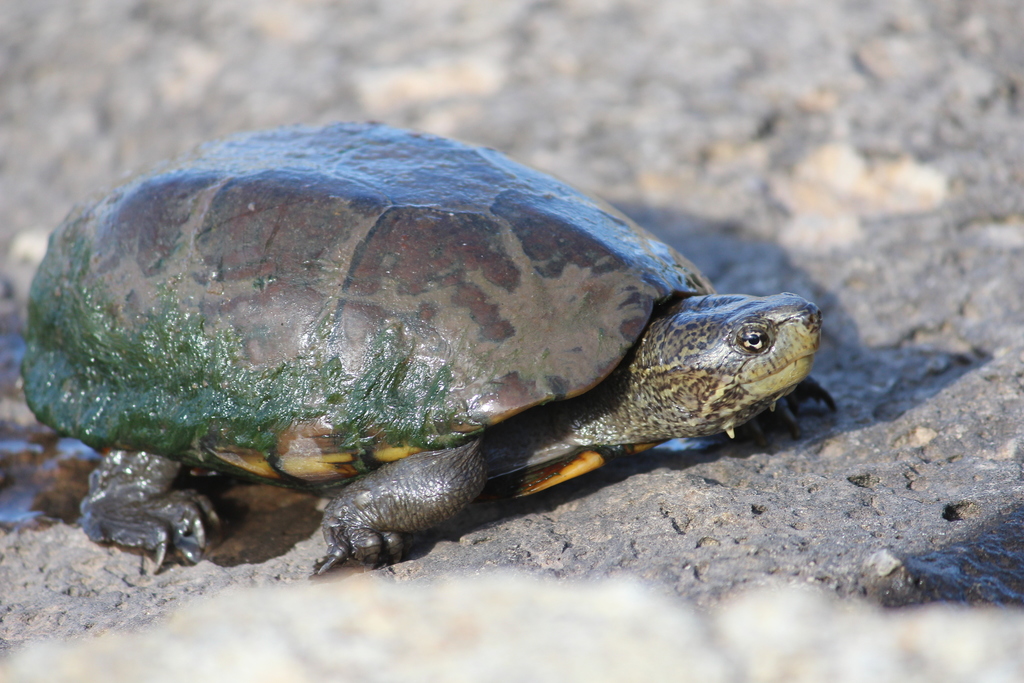
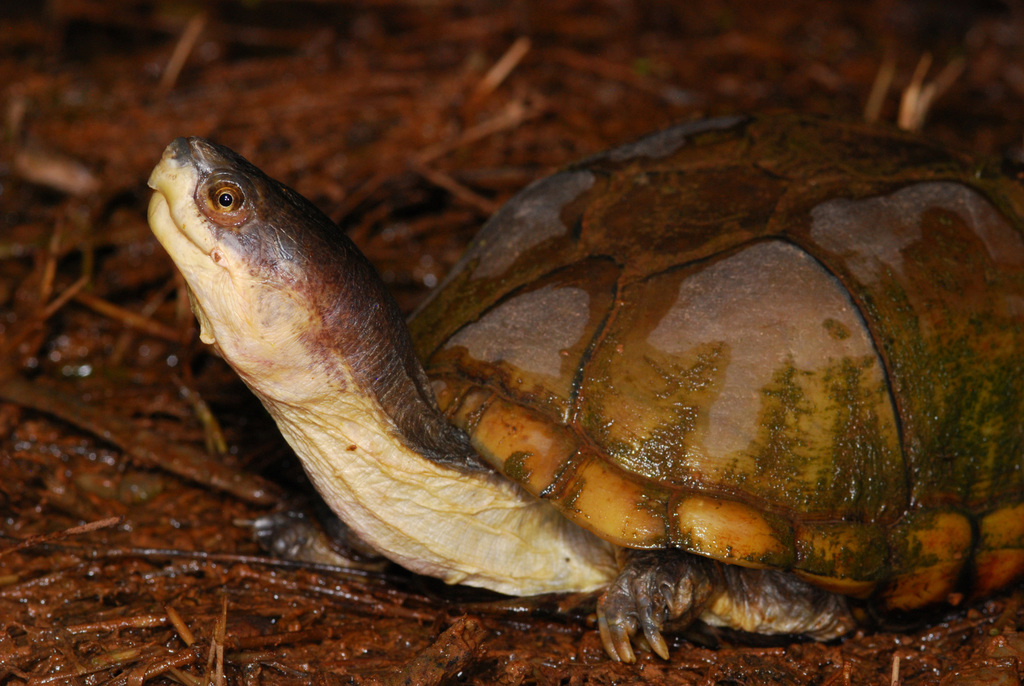
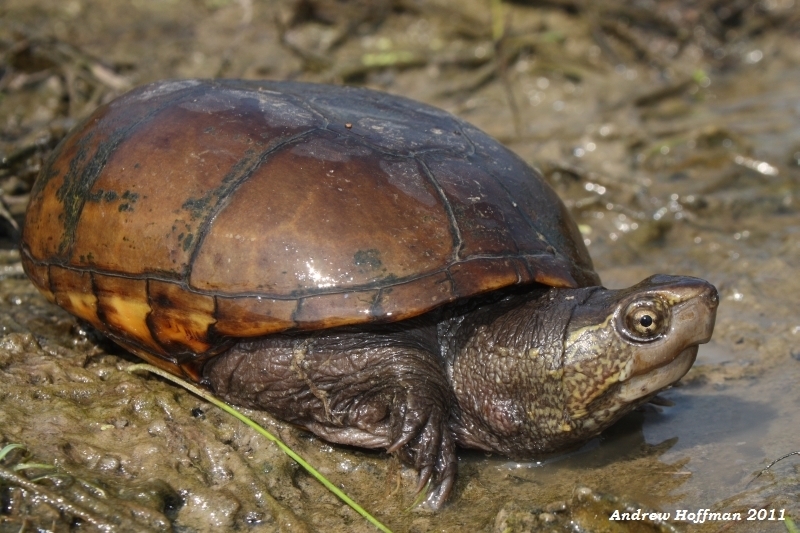
A small to medium-sized kinosternid turtle typically measuring 3–5 inches (7.6–12.7 cm) in carapace length. Carapace is oval, moderately domed, and smooth, lacking keels or serrations, with coloration ranging from olive to dark brown or nearly black, often uniform and without distinct patterning. The head is relatively small with subtle light striping or mottling, though markings are often faint. Limbs are moderately webbed. A key feature is the well-developed, hinged plastron, which is yellow to brown and may have variable dark markings, allowing the turtle to partially close its shell. Skin is smooth. Ventral surface coloration varies from yellowish to brown. Typically inhabits shallow, slow-moving or still freshwater habitats including ponds, marshes, ditches, and floodplain wetlands, often favoring soft, muddy substrates and abundant vegetation. Frequently leaves the water and may be encountered traveling overland, especially during wet conditions. Primarily nocturnal or crepuscular. Diet is omnivorous, consisting of aquatic invertebrates, insects, carrion, and plant material.
Similar species: Mississippi Mud Turtle (Kinosternon subrubrum hippocrepis) is similar but often shows more distinct head striping and regional variation; Musk Turtles (Sternotherus spp.) have a reduced plastron, more domed carapace, and often possess a distinct musky odor when handled; Painted Turtles (Chrysemys picta) have bright red and yellow markings and lack a hinged plastron.
Photos
Click any photo to expand · Photos via iNaturalist
Seasonal Activity
Individuals recorded by month
Range
Range data © iNaturalist contributors (CC BY 4.0)
Often Confused With
Two genera, one family. Musk Turtles (Sternotherus) have a reduced plastron with one hinge and a squarish pectoral scute — you can see skin between the scutes. Mud Turtles (Kinosternon) have a large plastron with two hinges and a triangular pectoral scute. Within each genus: Razor-backed Musk has a sharp keel visible in profile; Loggerhead Musk has a noticeably large head; Stripe-necked Musk has bold neck stripes. Among mud turtles, Striped Mud Turtle has three yellow head stripes; Yellow Mud Turtle has a yellow-olive head. Western species (Sonoran, Arizona) are found in desert streams of AZ/NM. Use the state filter to see which species occur where you are.