Chinese Crocodile Lizard
Shinisaurus crocodilurus
 LizardShinisauridaelargeVery Rare
Quick ID
Field Notes
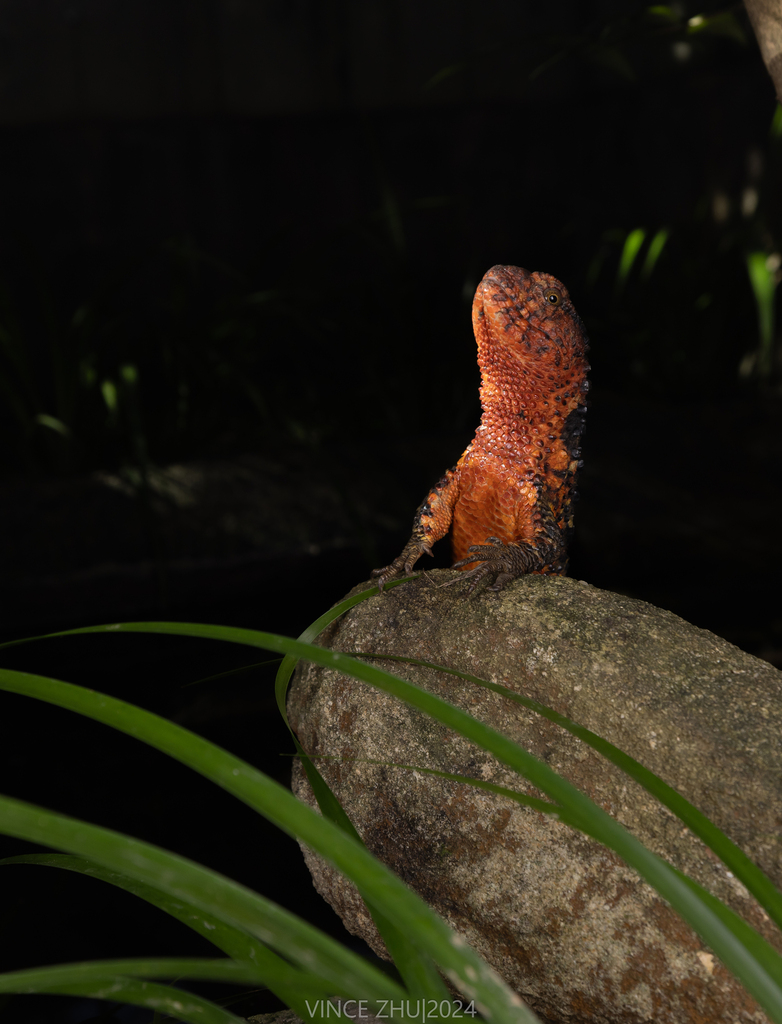
A medium-sized, semi-aquatic lizard typically measuring 16–20 inches (41–51 cm) in total length. Body is moderately robust and somewhat flattened dorsoventrally, adapted for aquatic and riparian life. Head is broad and somewhat flattened, with small eyes positioned laterally. Dorsal coloration is dark brown to black, often with a greenish tint, particularly on the head and anterior body. The dorsal surface is marked with scattered lighter spots or flecks of tan, yellowish, or olive, creating a somewhat mottled appearance. A distinctive feature is the presence of a prominent vertebral crest consisting of enlarged scales running along the spine, more pronounced in males. The tail is laterally compressed and constitutes approximately 50–55% of total length, with a low fin-like crest along its dorsal edge and a light-colored or pale ventral stripe. Scales are keeled and overlapping, giving the skin a somewhat rough texture. Dorsal scales are small and granular. The limbs are relatively short and robust, with webbing present between toes of the hind limbs, an adaptation for aquatic locomotion. Ventral surface is cream to yellowish-white, often with dark mottling or barring, particularly on the throat, belly, and tail. The jaw region may display reddish or orange coloration. Juveniles resemble adults but often display more contrasting patterning and a proportionally longer tail. Strictly inhabits clear, cool, fast-flowing mountain streams and rocky springheads in subtropical forests of southern China, particularly in Guangxi Province. Highly specialized for life in swift water, remaining close to rocky substrates and vegetation. Diet consists primarily of aquatic invertebrates, small crustaceans, insects, and occasionally small fish, obtained by foraging along stream bottoms and among rocks.
Photos
Click any photo to expand · Photos via iNaturalist
Range
Range data © iNaturalist contributors (CC BY 4.0)