Ornate Box Turtle
Terrapene ornata
 TurtleEmydidaesmallCommon
Quick ID
Field Notes
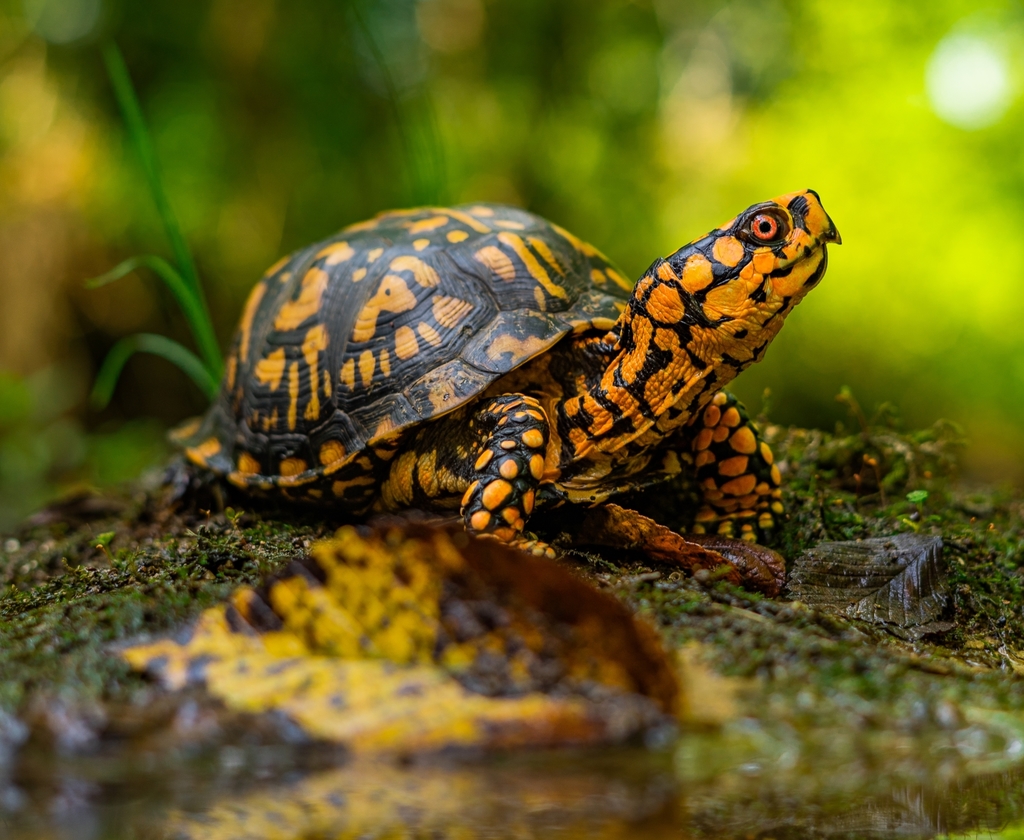
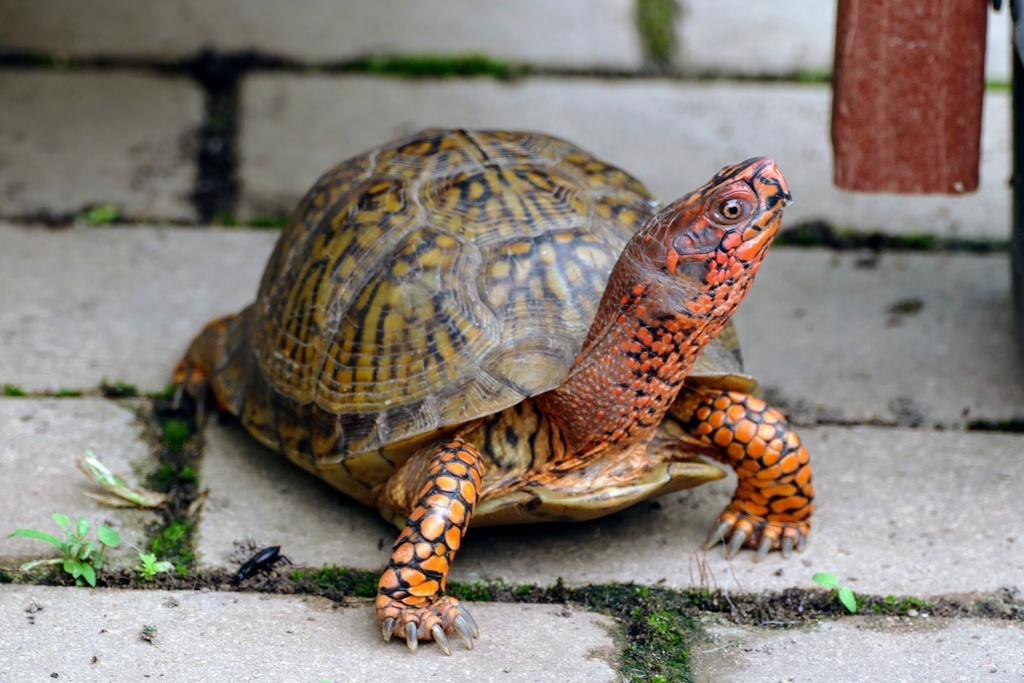
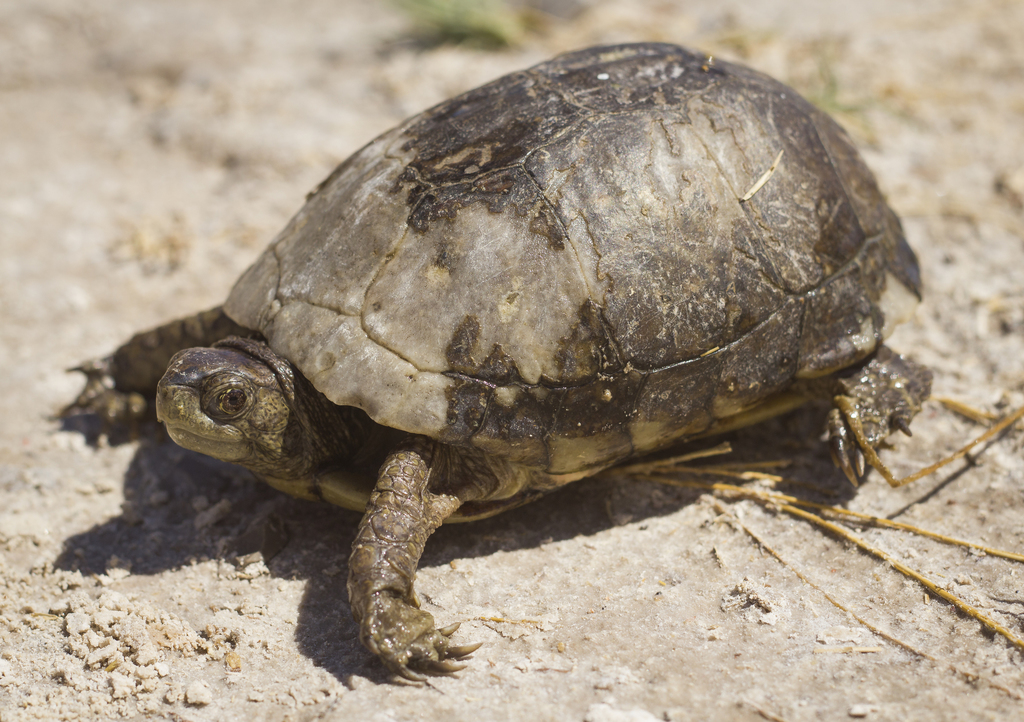
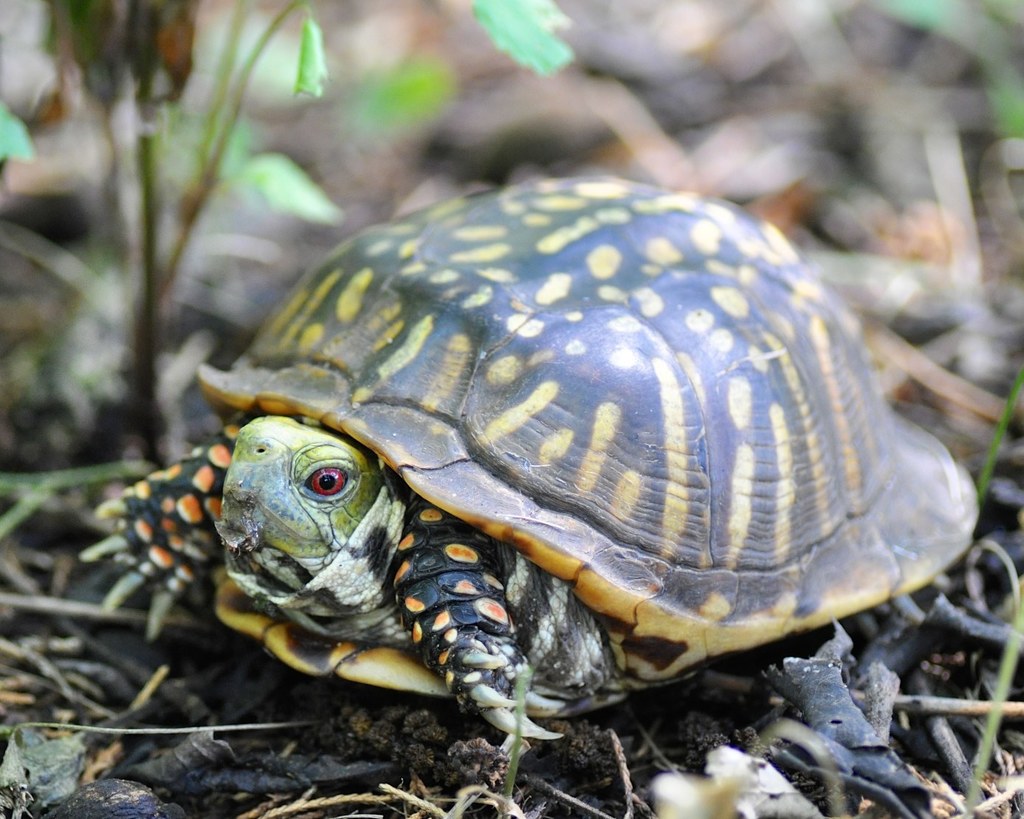
A small to medium-sized terrestrial emydid turtle typically measuring 4–6 inches (10.2–15.2 cm) in carapace length. Carapace is moderately domed but flatter than in closely related species, with coloration typically dark brown to black, marked with numerous thin yellow lines radiating outward from the center of each scute, forming a starburst or ornate pattern. The posterior margin is smooth. The head is relatively small with yellow or orange spotting or striping. Limbs are stout and adapted for terrestrial movement. A key diagnostic feature is the well-developed hinged plastron, allowing the turtle to close its shell tightly. Plastron is yellow with dark central blotches, often forming a symmetrical pattern. Skin is dark with yellow or orange spots. Eyes are often red in males and brown in females. Commonly inhabits prairies, grasslands, and open habitats with sandy or well-drained soils, often associated with burrows or loose substrates. Primarily terrestrial and well-adapted to drier environments than other box turtles. Diet is omnivorous, consisting of insects, worms, fruits, flowers, and other plant material.
Similar species: Eastern Box Turtle (Terrapene carolina) has a more domed carapace with blotched or radiating markings that are less fine and is more associated with forested habitats; Three-toed Box Turtle (Terrapene triunguis) typically has a more uniform, olive or brown carapace with reduced patterning and usually three toes on the hind feet; Blanding’s Turtle (Emydoidea blandingii) has a more elongated shell, bright yellow throat, and lacks a fully closable plastron.
Photos
Click any photo to expand · Photos via iNaturalist
Range
Range data © iNaturalist contributors (CC BY 4.0)
Often Confused With
All box turtles have a hinged plastron that lets them close completely — no other North American turtle does this. Eastern/Common Box Turtle: highly variable pattern, 4 toes on hind foot, found in moist forests. Three-toed Box Turtle: usually 3 toes on hind foot, often plain brown with faint markings, south-central US. Ornate Box Turtle: radiating yellow lines on each scute, domed shell, open grasslands and prairies. Where ranges overlap (especially MO, KS, OK, AR), hybrids occur.