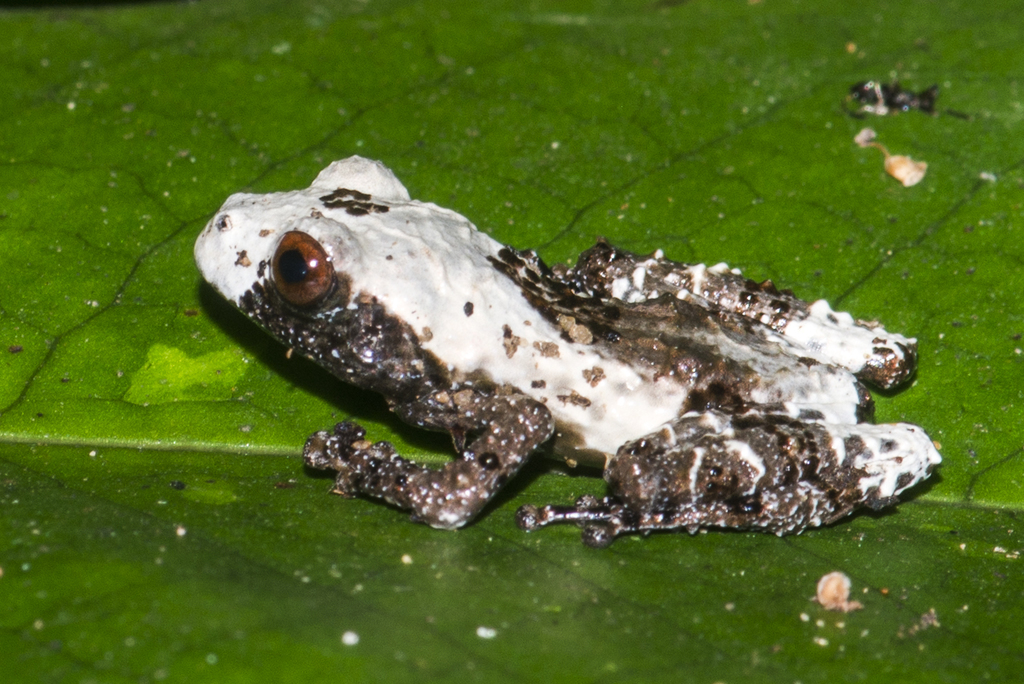
Pied Warty Frog
Theloderma asperum
 FrogRhacophoridaemediumVery Rare
Quick ID
Field Notes
A small, warty tree frog typically measuring 1.2–1.75 inches (3–4.5 cm) in length. Body is compact and robust with relatively short limbs adapted for gripping vegetation. Dorsal coloration is highly variable, ranging from gray, tan, brown, or olive to nearly black, typically marked with irregular dark brown or black blotches, spots, or reticulations that create a mottled appearance. The dorsal surface is characteristically warty and bumpy, with numerous small tubercles covering the head, body, and limbs, providing excellent camouflage in lichen-covered habitats. A distinctive feature is the presence of a prominent ridge or crest along the head. The snout is somewhat pointed. Fingers and toes are moderately webbed with expanded adhesive discs at the tips, typical of tree frogs. The ventral surface is cream to yellowish, usually with a granular texture and scattered dark flecking. The skin texture throughout is notably rough and warty, distinguishing it from smoother tree frog species. Iris coloration is typically golden or copper. Primarily inhabits tropical forests, bamboo thickets, and forested areas with lichen-covered branches and dense vegetation, where its warty appearance provides excellent camouflage. Often found on branches and foliage at various heights. Diet consists of small insects and other invertebrates gleaned from vegetation.
Call is a series of short, clicking or chuckling notes, often described as "tuck-tuck-tuck" or similar repetitive sounds. Calls are relatively soft and produced during the breeding season, typically given from vegetation at night.
Similar species: Polypedates leucomystax (Asian Common Tree Frog) lacks prominent warts and has more webbing between the toes; Rhacophorus pardalis (Spotted Tree Frog) has more distinct circular spots and smoother skin texture; Buergeria buergeri (Japanese Tree Frog) has a smoother dorsal surface and less prominent tuberculation.
Call
Photos
Click any photo to expand · Photos via iNaturalist
Range
Range data © iNaturalist contributors (CC BY 4.0)