Pond Slider
Trachemys scripta
 TurtleEmydidaemediumCommon
Quick ID
Field ID
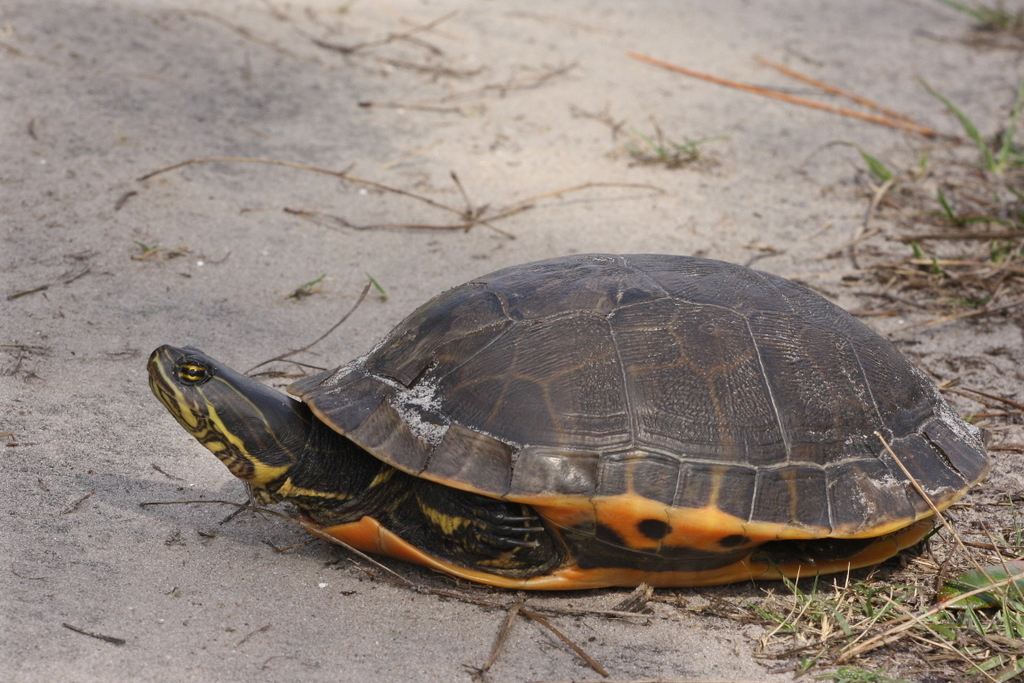
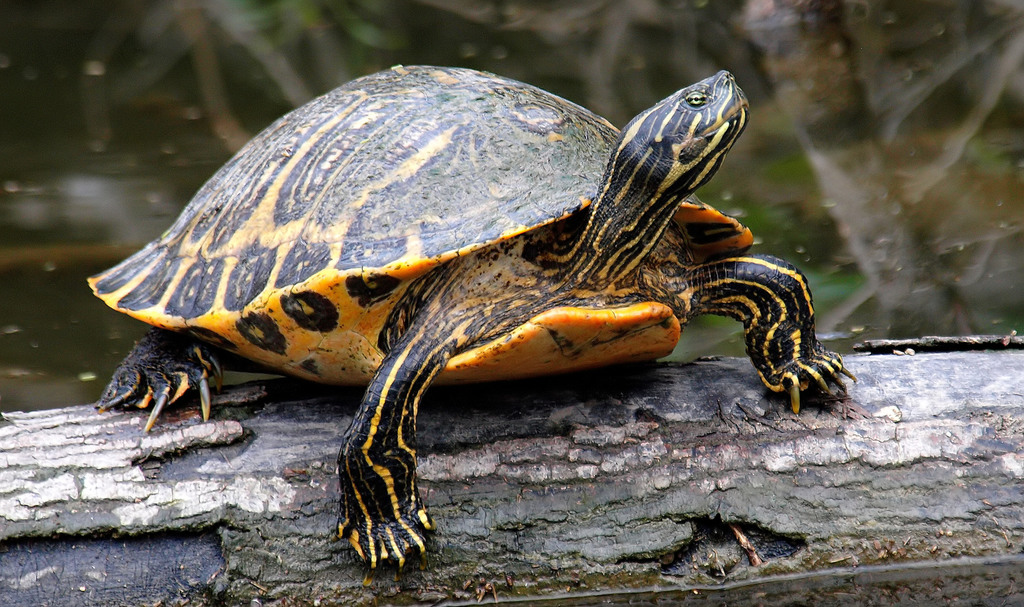
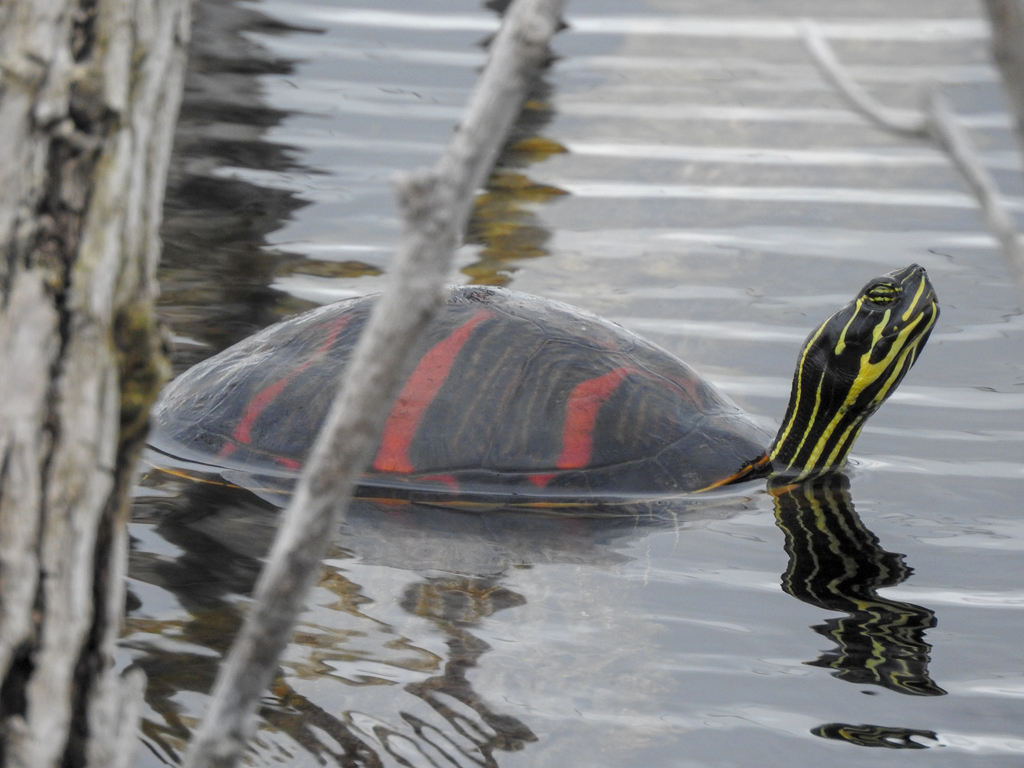
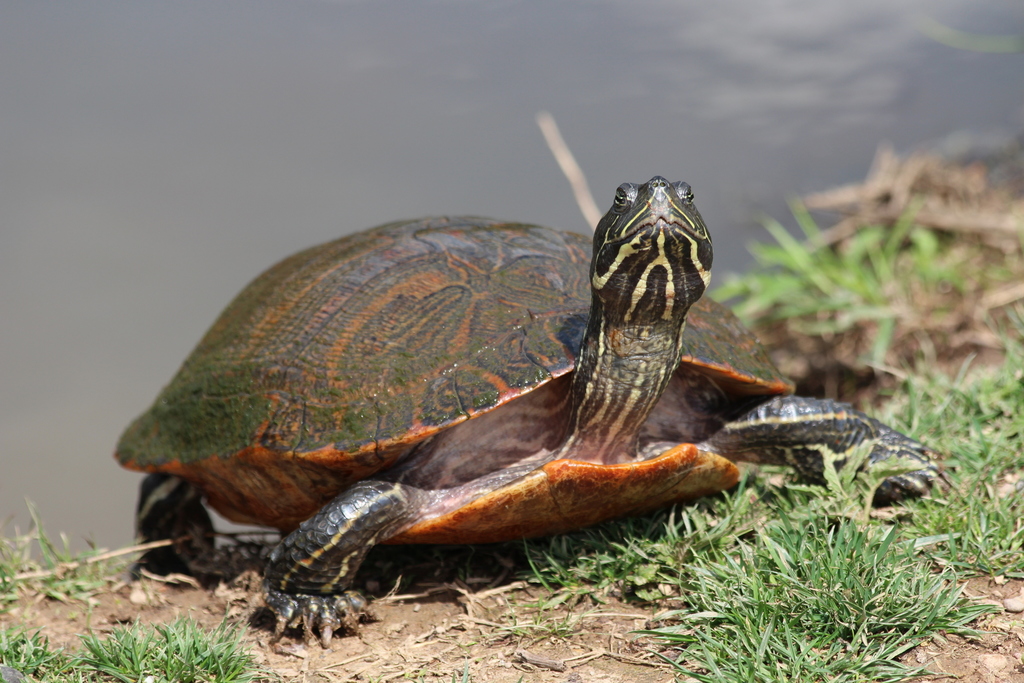
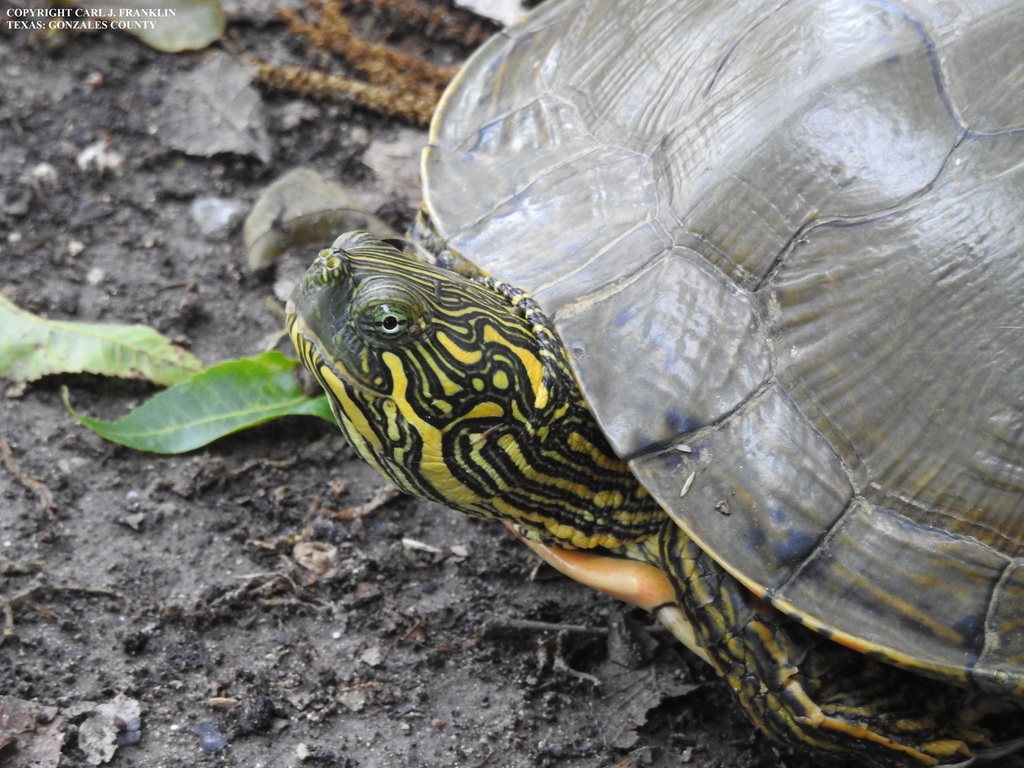
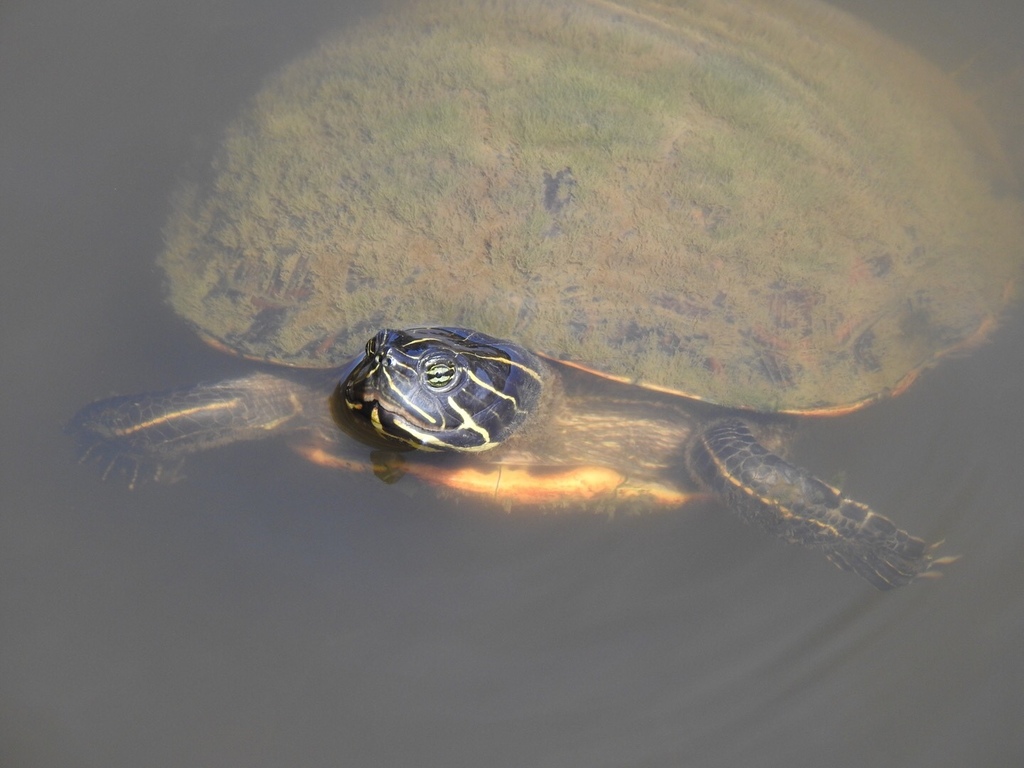
Pond Slider bears a distinctive reddish stripe behind each eye and displays a greenish or olive carapace with vertical yellow bars on the pleurals—the large scutes on the shell's sides. The plastron is yellow with dark blotches. The most likely confusion species are other basking turtles: River Cooter has five light stripes between the eyes and C-shaped marks on the carapace rather than vertical bars, while Map Turtles have prominent postorbital spots or crescent-shaped markings instead of the simple stripe behind the eye. Males of all three species develop extremely long forelimb nails, but the reddish eye-stripe remains the most reliable field mark across age and sex classes, though heavy melanin deposition in older individuals may obscure this feature.
Field Notes
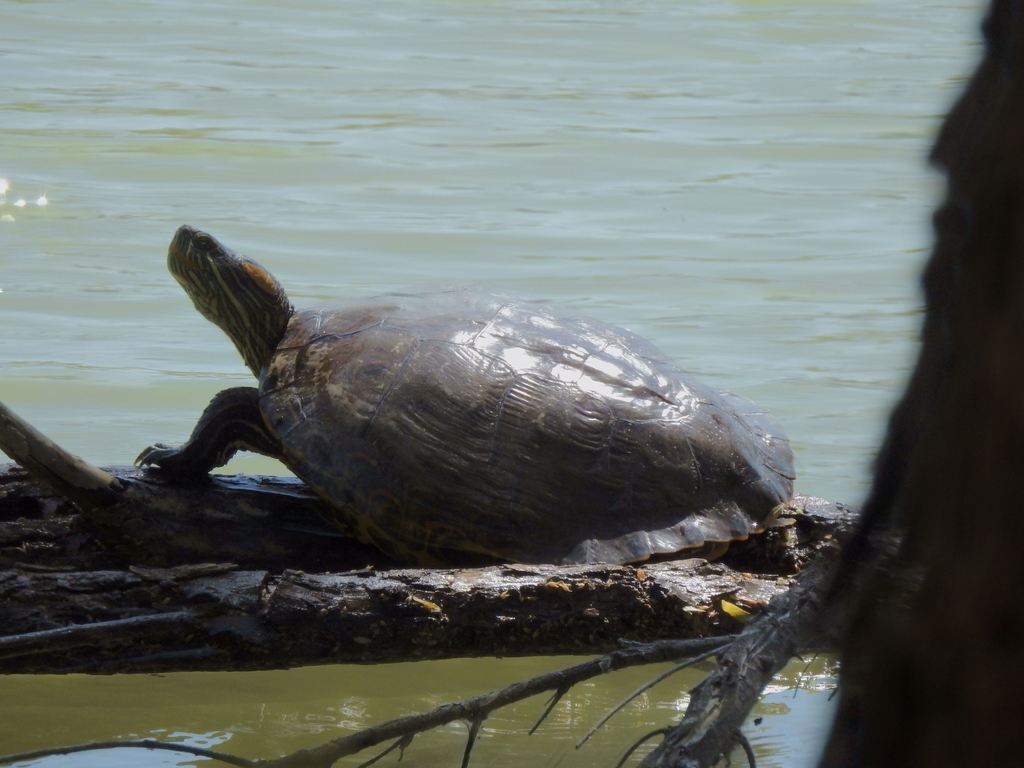
A medium to large semi-aquatic emydid turtle with adult carapace lengths ranging from 5–8 inches (12.5–20.3 cm), and record individuals reaching 11⅞ inches (30.2 cm). Carapace is oval, moderately domed, and serrated posteriorly, green to olive with vertical yellow stripes on the pleurals that darken with age. Plastron is yellow with a dark blotch on each scute. Head is characterized by a prominent broad red stripe behind each eye, bordered by narrower yellow lines. Limbs are striped with yellow, and the tail is dark dorsally with lighter lateral edges. Occupies diverse freshwater habitats including ponds, lakes, oxbows, slow-moving rivers, marshes, and ditches, especially those with abundant aquatic vegetation and basking sites such as logs or rocks. Highly aquatic but often observed basking communally. Omnivorous diet includes aquatic plants, algae, invertebrates, fish, amphibians, and carrion. Females nest terrestrially during warmer months, depositing eggs in excavated nests sometimes far from water.
Similar species: Yellow-bellied Slider (Trachemys scripta scripta) has yellow blotches rather than red behind the eyes and distinct vertical yellow bars on pleural scutes; Cooters (Pseudemys spp.) lack the red ear stripe, have flatter carapaces, and narrow light stripes on the head; Painted Turtles (Chrysemys picta) have a smooth posterior shell margin and narrower yellow or reddish striping patterns.
Photos
Click any photo to expand · Photos via iNaturalist
Seasonal Activity
Individuals recorded by month
Range
Range data © iNaturalist contributors (CC BY 4.0)
Recorded At
Often Confused With
These basking pond turtles all share striped necks and similar body shapes — look at three things. First, neck length: Chicken Turtle has a remarkably long neck (often longer than the shell width) and very broad leg stripes. Second, ear patch: Sliders (Trachemys) typically have a bold ear patch — red in Red-eared Slider, yellow in Yellow-bellied. Cooters (Pseudemys) lack an ear patch and instead show complex hairpin or C-shaped head markings. Third, plastron: Red-bellied Cooters (nelsoni, rubriventris, alabamensis) have orange-red on the plastron; River and Florida Cooters are plain yellow below.