Gray's Monitor
Varanus olivaceus
 LizardVaranidaelargeVery Rare
Quick ID
Field Notes
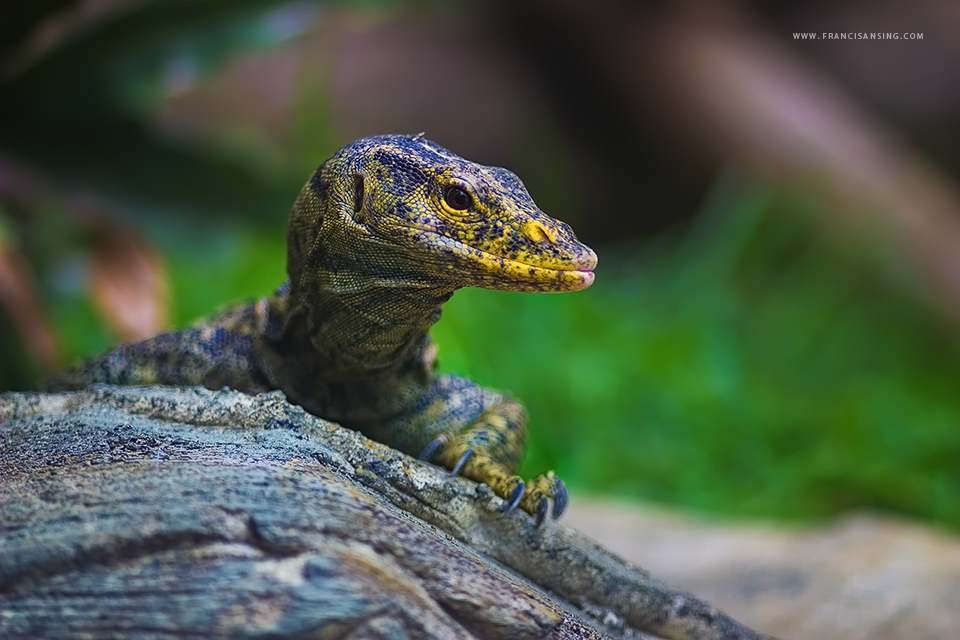
A large, heavy-bodied monitor lizard typically measuring 24–36 inches (61–91 cm) in total length, with some individuals reaching up to 48 inches (122 cm). Body is robust and muscular with a relatively short tail compared to other varanids. Dorsal coloration is typically olive-brown to dark brown, often with a somewhat uniform appearance, though some individuals display faint darker crossbands or mottling along the back and sides. The head is moderately large and somewhat flattened, with small, round eyes positioned laterally. Scales are relatively large and heavily keeled, giving the body a distinctly textured appearance. The neck and body may display subtle lighter reticulations or spots interspersed among the darker coloration. Ventral surface is typically lighter, ranging from cream to pale brown or grayish, often with darker flecking or spotting. Limbs are powerful and well-developed with sharp claws, adapted for climbing and terrestrial locomotion. The tail is prehensile or semi-prehensile, used for balance and climbing. A key diagnostic feature is the relatively stocky build and the preference for semi-arboreal and terrestrial lifestyles compared to the more aquatic monitors. Primarily inhabits tropical rainforests, humid woodlands, and dense vegetation near rivers and wetland margins in the Philippines. Spends considerable time both on the ground and in lower vegetation and trees, though less aquatic than many monitor species. Diet consists of small vertebrates including other lizards, small mammals, birds, and their eggs, as well as carrion when available.
Photos
Click any photo to expand · Photos via iNaturalist