Two-toed Amphiuma
Amphiuma means
 SalamanderAmphiumidaelargeUncommon
Quick ID
Field Notes
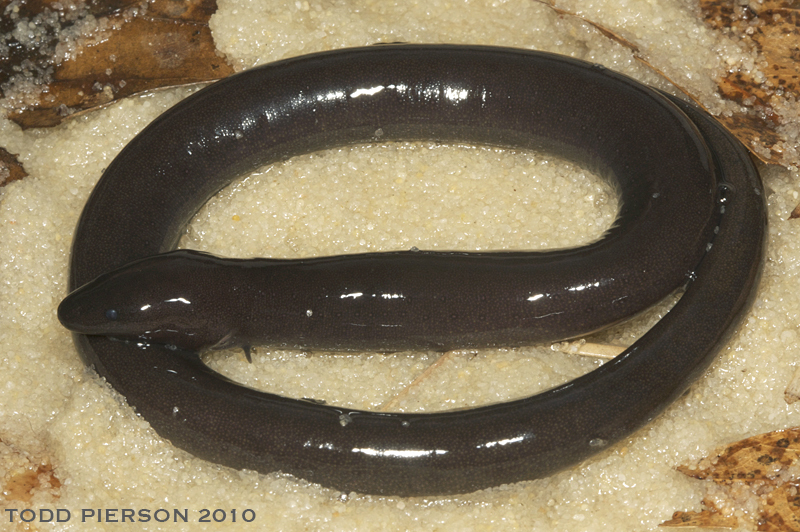
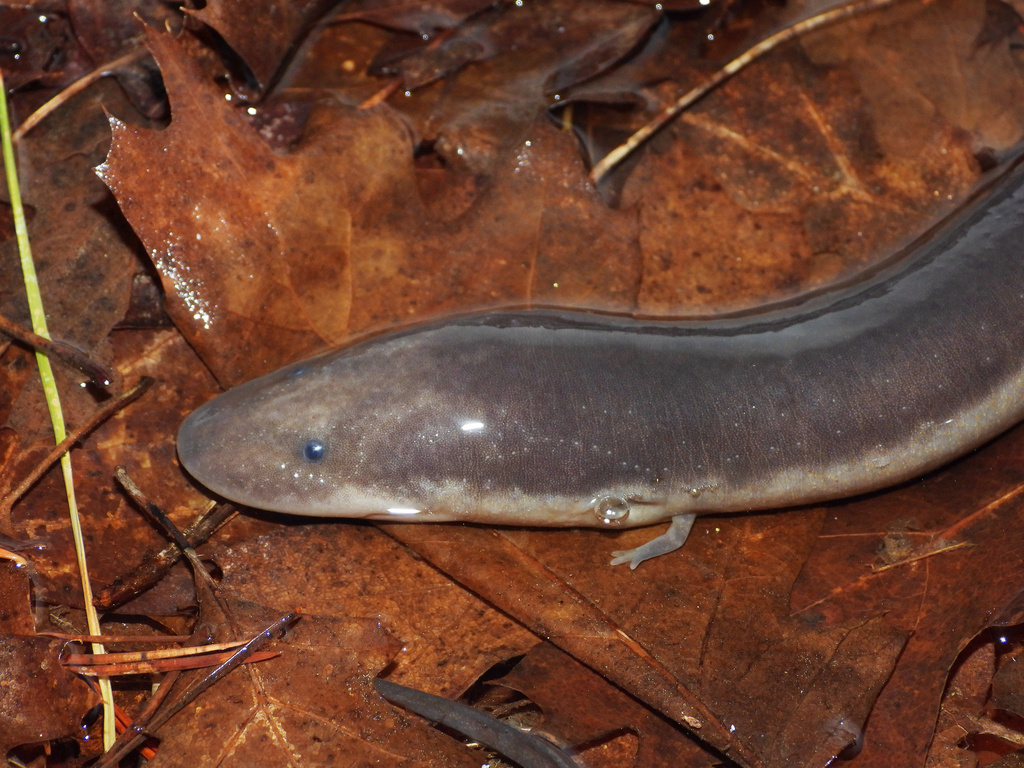
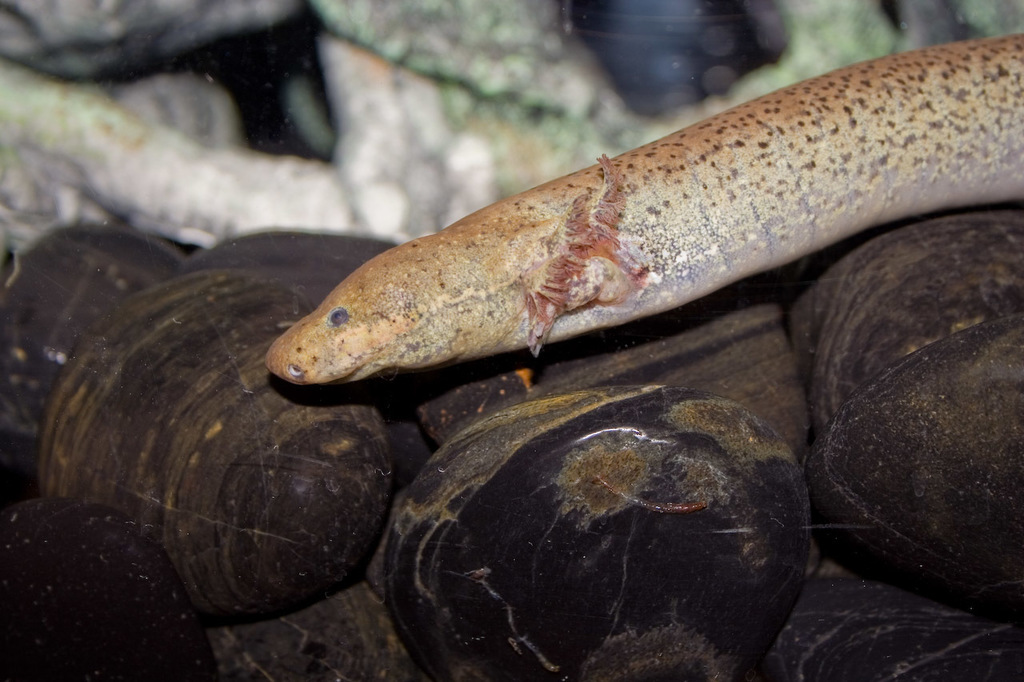
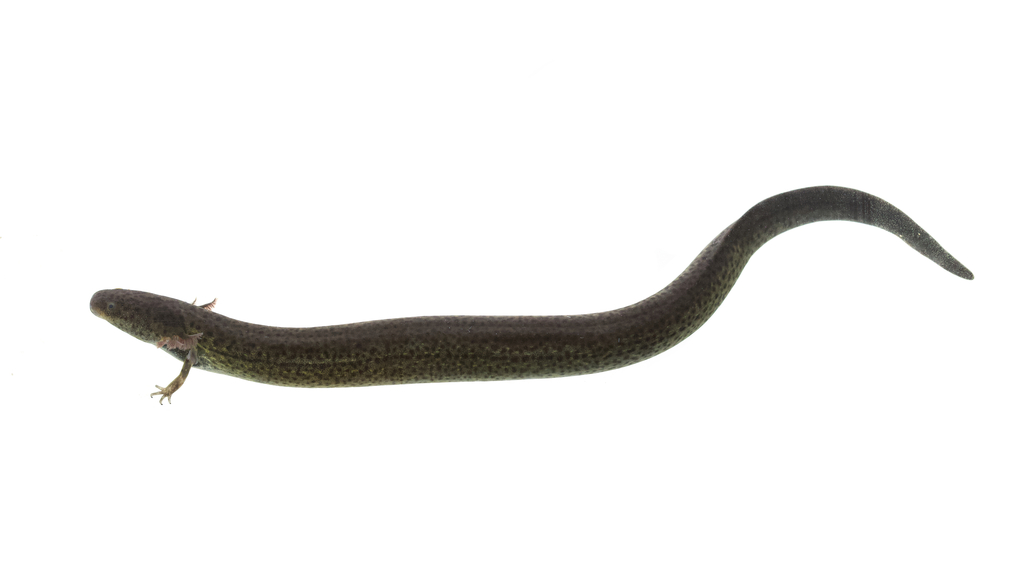
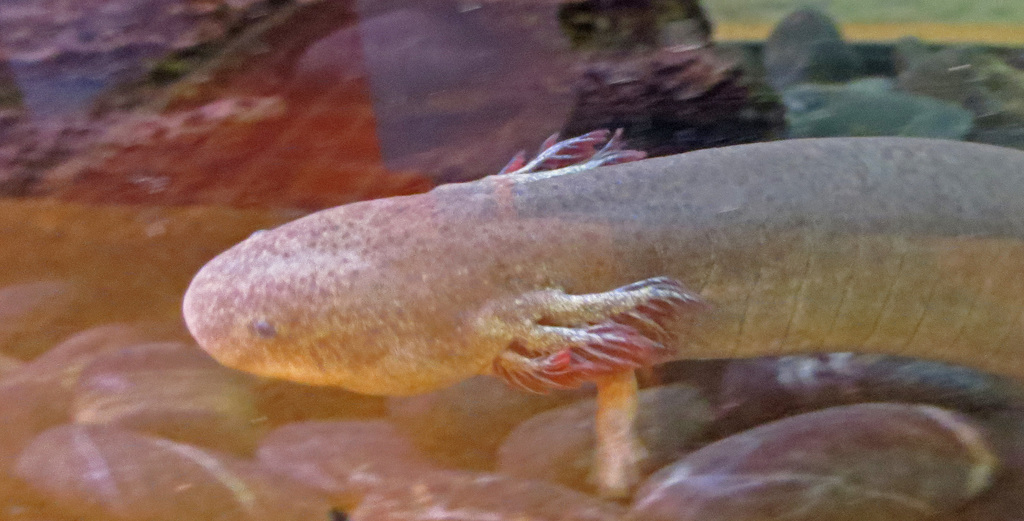
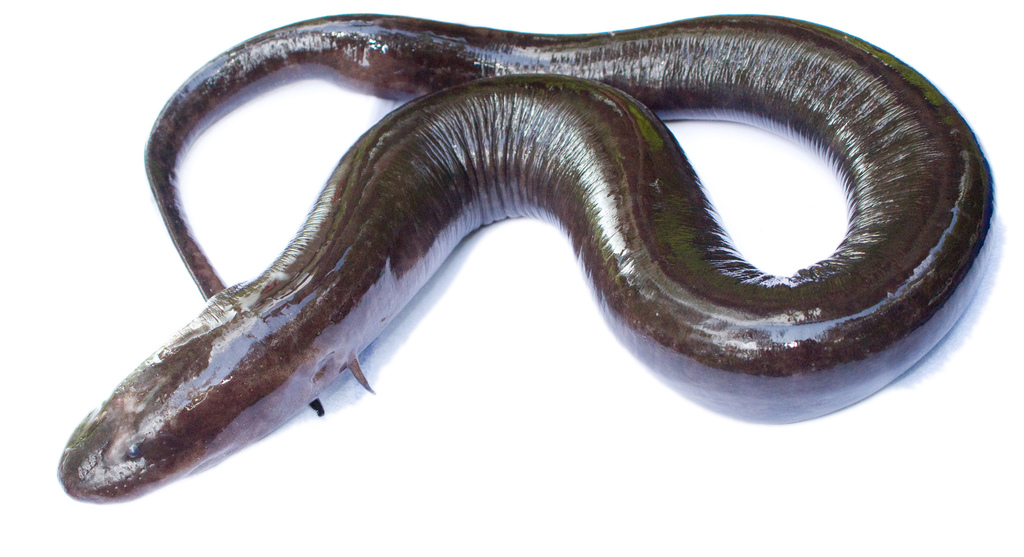
A large, eel-like salamander typically measuring 18–29 inches (46–74 cm) in length, with some individuals exceeding 3 feet (91 cm). Body is extremely elongate and cylindrical with a relatively uniform diameter throughout, resembling an eel more than a typical salamander. Limbs are very small and reduced, with each limb bearing only two digits (a diagnostic feature for this species), positioned far apart along the body. Head is small, somewhat flattened dorsoventrally, with a terminal mouth and small eyes. Dorsal coloration is typically uniform dark brown to dark gray, occasionally with a slight greenish or olive tint, lacking conspicuous patterns or markings. The dorsal surface may appear slightly glossy or oily. Ventral surface is typically lighter, ranging from grayish-brown to yellowish-brown, usually unmarked or with faint mottling. Skin is smooth and slimy, lacking prominent costal grooves typical of many other salamanders. The tail is laterally compressed and tapers to a fine point, comprising approximately one-third of the total length and serving as a rudder for aquatic locomotion. Amphiumas are fully aquatic and rarely leave water, though they are capable of traversing wet soil and leaf litter during nocturnal terrestrial foraging. They inhabit swamps, blackwater rivers, cypress swamps, pocosins, ditches, and other permanent or semi-permanent freshwater wetlands with soft substrates in coastal plains, particularly in areas with dense aquatic vegetation or submerged logs and leaf litter. These fossorial creatures spend much of their time burrowed in mud and detritus. Diet consists primarily of fish, crayfish, aquatic insects, other salamanders, and occasionally small snakes and turtles, captured via a quick snapping bite.
Photos
Click any photo to expand · Photos via iNaturalist
Range
Range data © iNaturalist contributors (CC BY 4.0)
Often Confused With
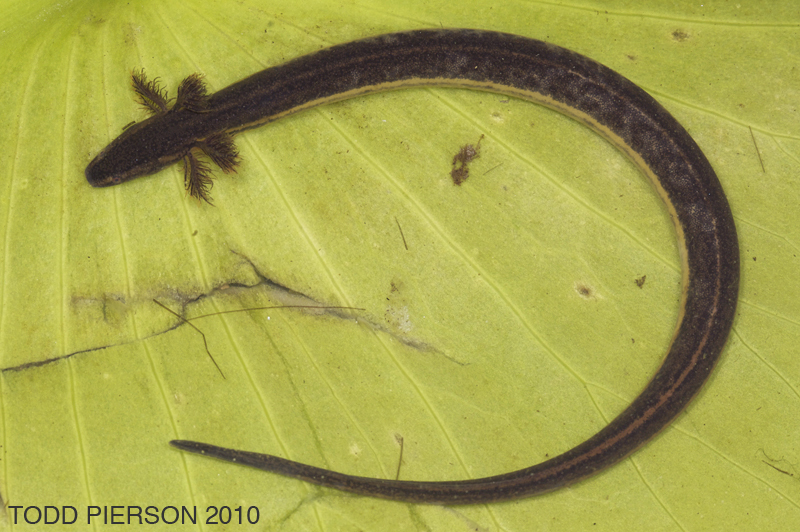
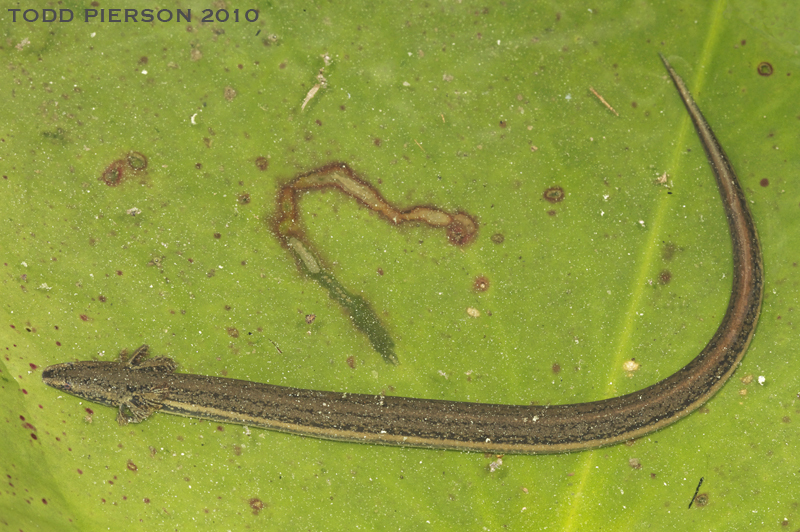
All are large, eel-like aquatic salamanders — but they belong to two very different families. Amphiumas (Amphiuma) have four tiny, nearly useless legs and NO external gills; they look like a thick, dark eel and can deliver a painful bite. Tell the three species apart by counting toes: one, two, or three. Sirens (Siren, Pseudobranchus) have only two small front legs and NO hind legs at all, plus bushy external gills that stay visible throughout life. Greater Siren is huge (up to 38") and dark; Lesser Siren is smaller (up to 20"); Dwarf Sirens are tiny (under 8") and often striped.