Three-toed Amphiuma
Amphiuma tridactylum
 SalamanderAmphiumidaelargeUncommon
Quick ID
Field ID
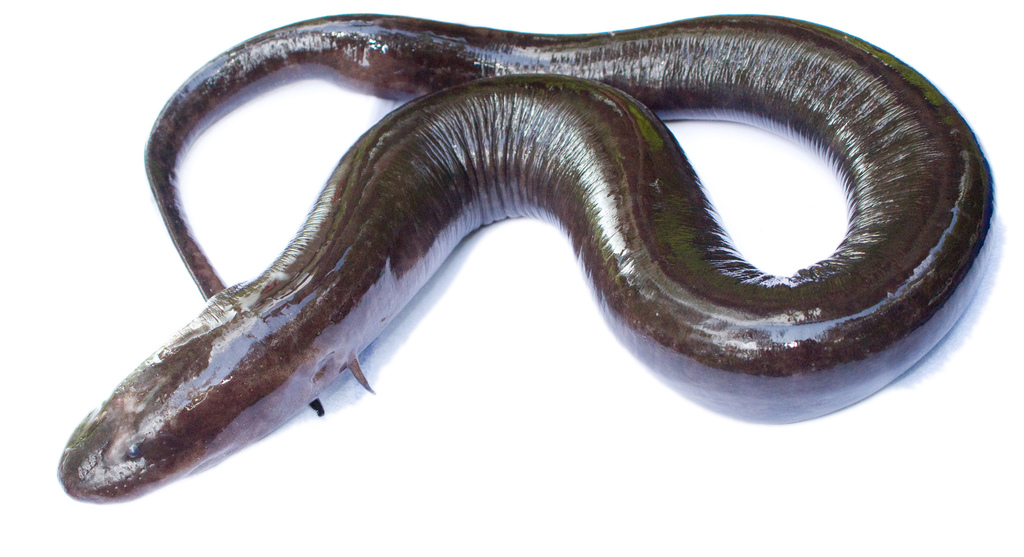
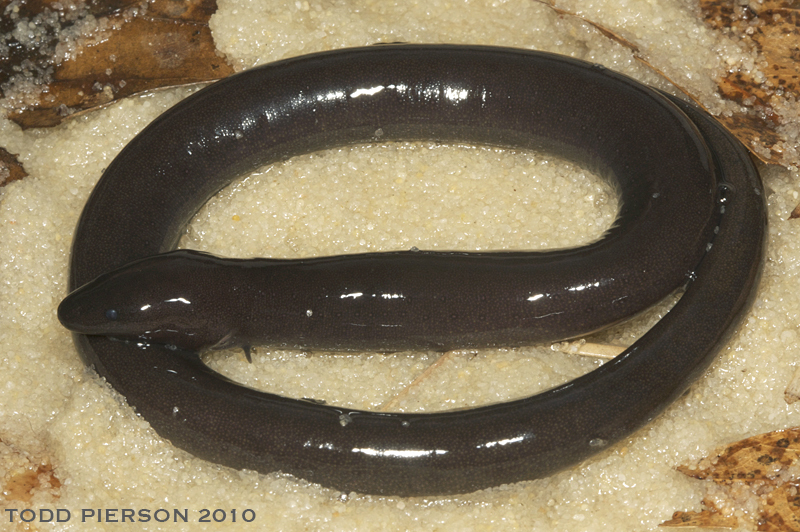
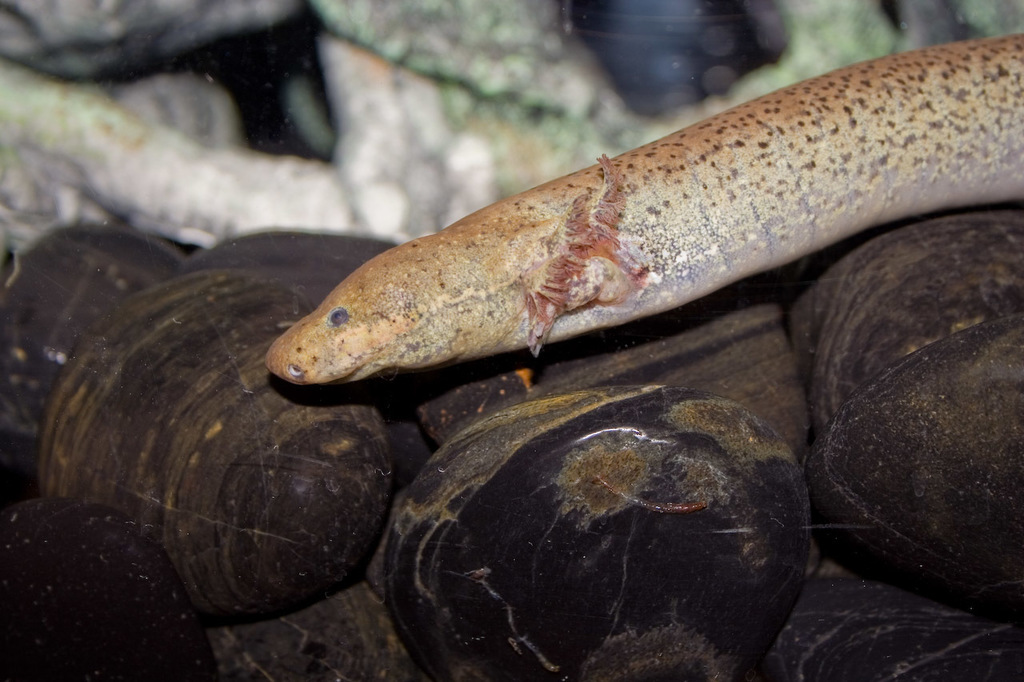
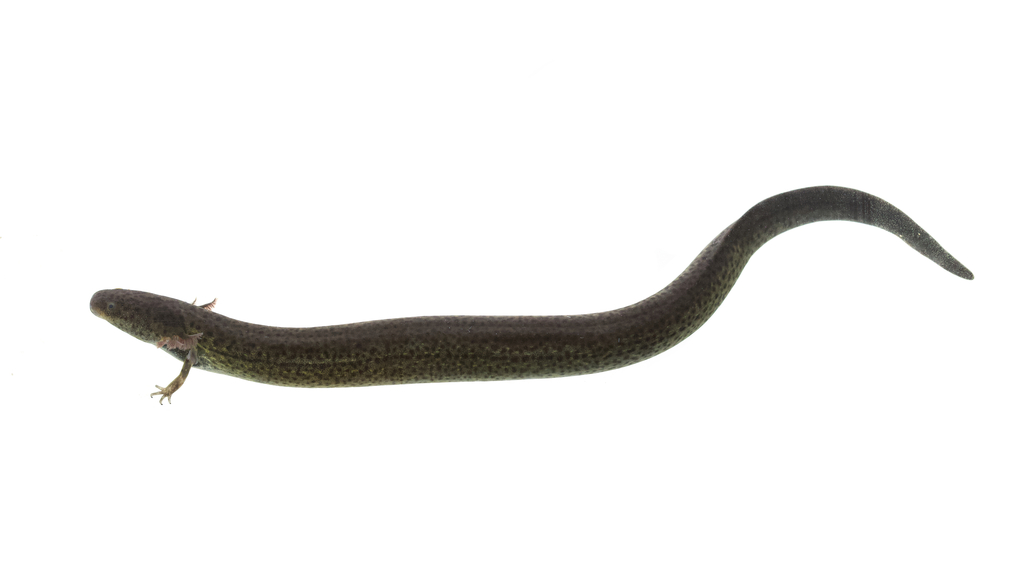
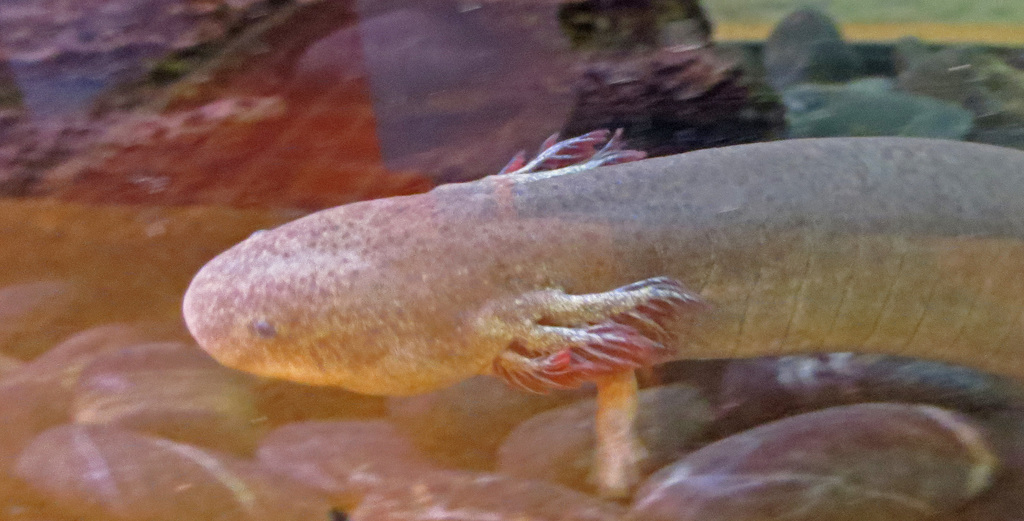
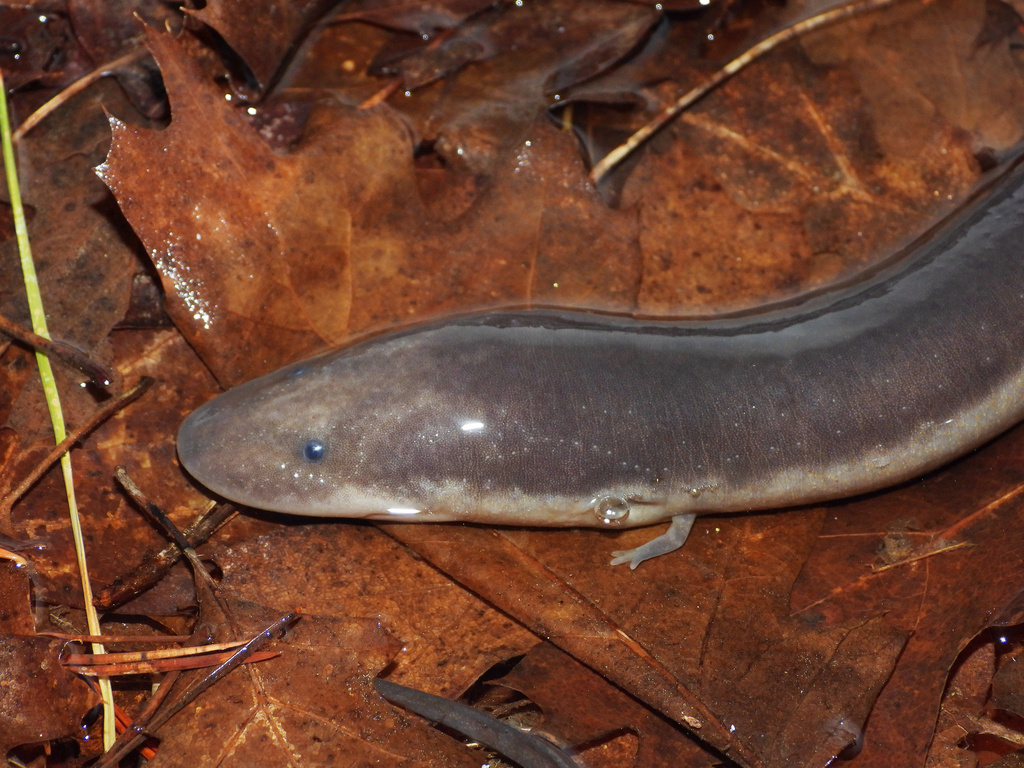
The three-toed amphiuma has a distinctly eel-like body with four tiny, vestigial limbs bearing three digits each—a diagnostic combination found in no other Arkansas salamander. The retained gill slit and absence of external gills separate it from the mudpuppy (which has external gills and four digits on all limbs) and the siren (which has external gills and front limbs only). Uniform gray to brown coloration with a lighter belly, reaching 18–30 inches in length, identifies this fully aquatic denizen of muddy swamps, ditches, and ponds.
Field Notes
A large, elongate aquatic salamander typically measuring 14–30 inches (35.6–76.2 cm) in total length, with some individuals exceeding 40 inches (101.6 cm). Body is eel-like, cylindrical, and robust, with extremely reduced limbs bearing three small toes on each foot. Dorsal coloration is uniform dark gray, brown, or black, often appearing glossy. The head is relatively small and blunt with small, lidless eyes. Mouth is large with numerous sharp teeth. Skin is smooth and somewhat slippery. A single gill slit is present on each side of the head, though external gills are absent in adults. Tail is long and laterally compressed, aiding in swimming. Ventral surface is slightly lighter than the dorsum, typically gray to brown. Occupies a variety of aquatic habitats including swamps, marshes, sluggish streams, ditches, and heavily vegetated wetlands, often in areas with abundant mud or organic debris. Frequently buries itself in substrate or occupies crayfish burrows during dry conditions. Primarily nocturnal. Diet consists of a wide range of prey including fish, amphibians, crayfish, insects, and other aquatic invertebrates, taken via active foraging.
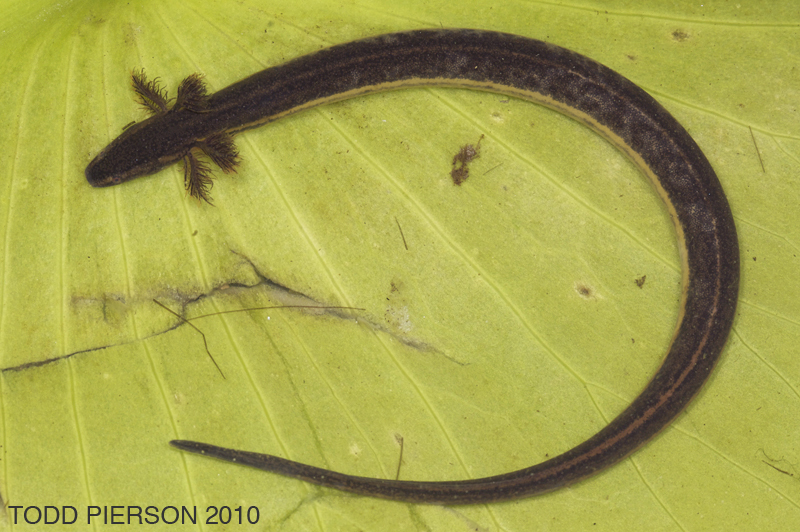
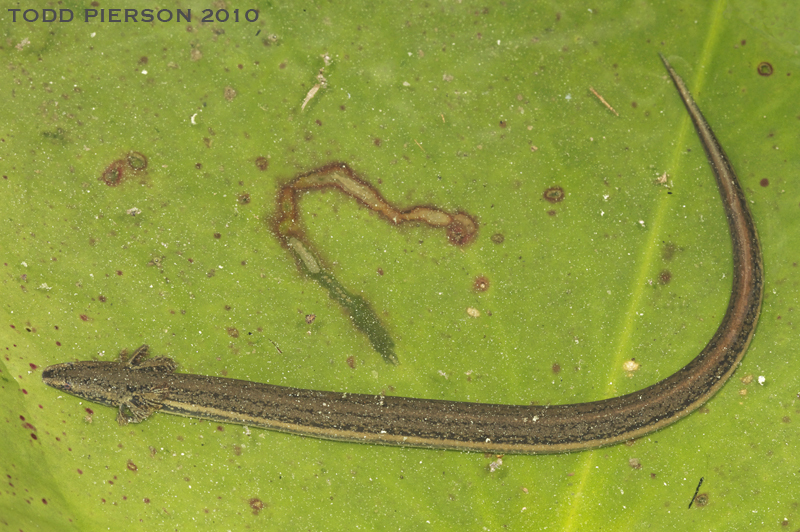
Similar species: Two-toed Amphiuma (Amphiuma means) has only two toes on each limb and typically attains larger average sizes; Lesser Siren (Siren intermedia) retains external gills and lacks hind limbs entirely; Greater Siren (Siren lacertina) also has external gills and lacks hind limbs, and typically exhibits a more laterally compressed body with fin-like tail.
Photos
Click any photo to expand · Photos via iNaturalist
Seasonal Activity
Individuals recorded by month
Range
Range data © iNaturalist contributors (CC BY 4.0)
Recorded At
Often Confused With
All are large, eel-like aquatic salamanders — but they belong to two very different families. Amphiumas (Amphiuma) have four tiny, nearly useless legs and NO external gills; they look like a thick, dark eel and can deliver a painful bite. Tell the three species apart by counting toes: one, two, or three. Sirens (Siren, Pseudobranchus) have only two small front legs and NO hind legs at all, plus bushy external gills that stay visible throughout life. Greater Siren is huge (up to 38") and dark; Lesser Siren is smaller (up to 20"); Dwarf Sirens are tiny (under 8") and often striped.